

 English
  中文简体
中文简体  عربى
عربى 
YITENG
YITENG
YITENG
YITENG
YITENG
YITENG
YITENG
YITENG
YITENG
Content
- 1 Why the Nylon Roller Cage Supplier Affects Bearing Performance
- 2 Material Selection: Check the Polymer, Not Just the Name
- 3 Mold Development and Tooling Capability
- 4 Quality System and Inspection Capability
- 5 Production Capacity and Delivery Reliability
- 6 Product Range as a Signal of Process Experience
- 7 How to Compare Quotes From Nylon Bearing Roller Cage Suppliers
- 8 Source From a Supplier That Understands the Application
When you source nylon bearing roller cages for a new bearing line or a replacement program, the supplier you choose determines more than the piece price on the quotation. Cage quality affects bearing noise, operating temperature, speed capability, and service life. A cage that fails in the field stops a machine, and the cost of that downtime usually dwarfs the savings from a cheaper quote.
This article gives you a practical framework for evaluating nylon bearing roller cage suppliers: what to check in materials, tooling, quality systems, and production capacity, and how to compare quotations against the same criteria.
Why the Nylon Roller Cage Supplier Affects Bearing Performance
The cage is not just a spacer. In a roller bearing, the cage keeps rollers evenly spaced, prevents roller-to-roller contact, and guides the rollers through the load zone. Nylon cages achieve this with lower mass and lower friction than steel or brass cages, which reduces heat generation, lowers noise, and improves speed capability.
Those benefits appear only when the cage is designed and molded correctly. Roller pockets with inconsistent pitch cause uneven load distribution. Thin web sections crack under repeated stress. Poorly controlled glass fiber orientation leads to warpage and premature wear. When a nylon cage fails, fragments can enter the raceway and cause bearing seizure.
That is why a nylon bearing roller cage supplier should be judged on material knowledge, mold quality, and process discipline, not just on price and delivery.
Material Selection: Check the Polymer, Not Just the Name
Nylon cages are typically molded from polyamide grades such as PA66, PA46, or high-performance polyphthalamide (PPA), often reinforced with glass fiber. The specific grade determines continuous operating temperature, chemical resistance, and dimensional stability.
- PA66 with 25-30% glass fiber is the common choice for general industrial and automotive applications.
- PA46 handles higher continuous temperatures and suits engine and transmission environments.
- PPA and other specialty grades perform well with aggressive lubricants and higher thermal loads.
Ask the supplier which specific grades they process and how they verify incoming material. A reliable supplier maintains material traceability and can provide batch certificates. If your cage will run in a high-temperature or chemically aggressive environment, confirm that the chosen grade has been validated for that condition. Do not assume that every nylon cage with the same part number is made from the same resin.
Mold Development and Tooling Capability
Roller cage geometry is demanding. Pocket pitch, pocket depth, and web thickness all affect roller guidance and cage strength. These features are determined by the mold, so tooling quality is the foundation of cage quality.
A supplier with an in-house mold development team can review your drawings, suggest design adjustments for moldability, and deliver prototypes faster. Without in-house tooling, the supplier depends on external mold makers and cannot easily correct dimensional issues that appear during sampling.
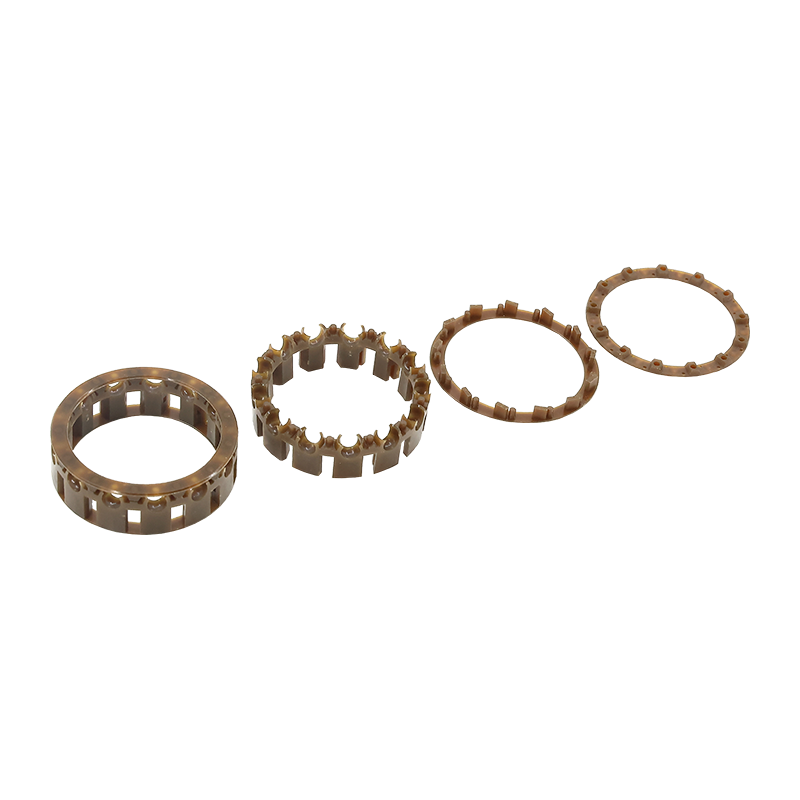
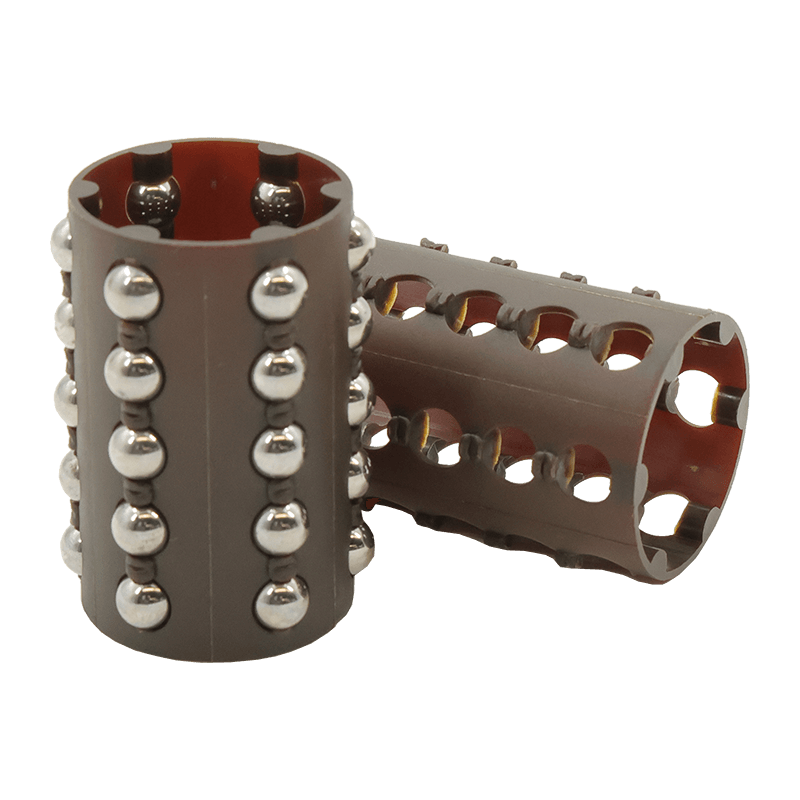
Jiaxing Yiteng established its R&D team in 2014 specifically for mold development and new product design. That history matters when your cage requires custom geometry or when you need iterative improvements during first-article approval. For applications that require compact cross-sections and precise pocket geometry, a radial needle roller and cage assembly demonstrates how pocket precision directly affects roller guidance performance.
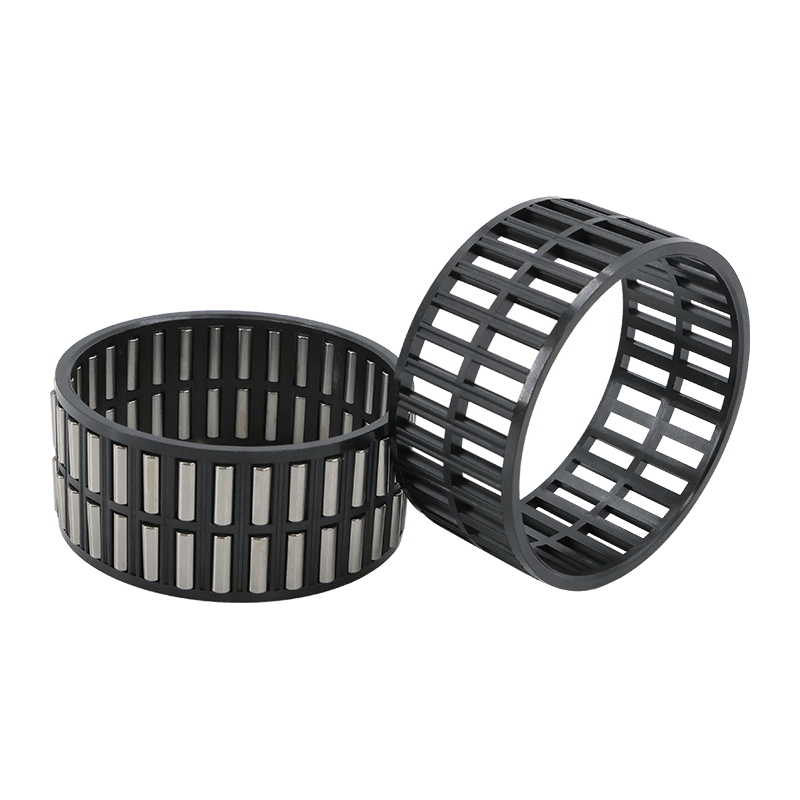 Radial Needle Roller and Cage Assembly (K/KK Series) Suppliers, Wholesale FactorJiaxing Yiteng Intelligent Technology Co., Ltd. is Wholesale Radial Needle Roller and Cage Assembly (K/KK Series) Suppliers and Factory i...View Product →
Quality System and Inspection Capability
ISO 9001 certification is a baseline, not a differentiator. A supplier can hold the certificate and still ship inconsistent cages. What matters is how the quality system operates on the production floor.
Ask for concrete evidence during an audit or virtual review:
- Incoming material inspection procedures, including moisture content checks before molding
- In-process monitoring of molding parameters such as melt temperature, injection pressure, and cooling time
- Final dimensional inspection covering pocket pitch, bore diameter, outside diameter, and web thickness
- First-article inspection reports that document measurements before serial production starts
- Non-conformance handling and corrective action records from the past year
Jiaxing Yiteng passed ISO 9001 certification in 2013 and has maintained a quality management system since then. Certification history alone does not guarantee quality, but a long-standing system usually indicates consistent process control.
Production Capacity and Delivery Reliability
A supplier with limited capacity can quote attractive prices but fail to meet ramp-up schedules. Ask for realistic lead times and check whether the plant has room for volume growth.
Jiaxing Yiteng expanded its production facility in 2018 specifically to increase output. Combined with experience dating back to 2009, that expansion supports customers who need ongoing production volumes rather than one-off samples. During supplier evaluation, ask about current capacity utilization and how the supplier handles peak demand periods.
Product Range as a Signal of Process Experience
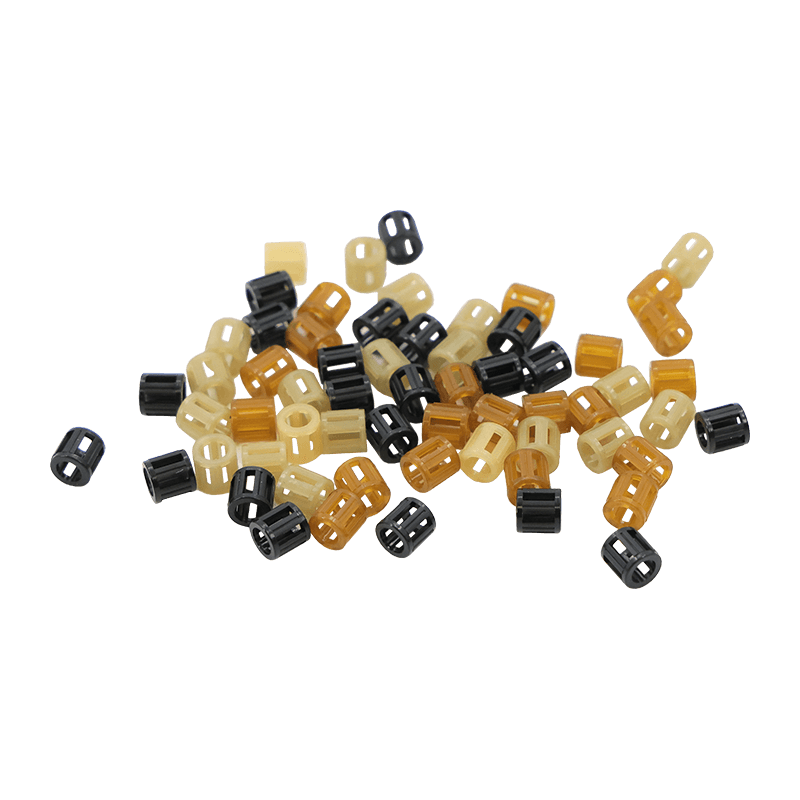
A nylon bearing roller cage supplier that produces cages for needle roller, cylindrical roller, ball, and automotive bearings accumulates process knowledge across different geometries and load conditions. That experience helps when your own application has unique requirements.
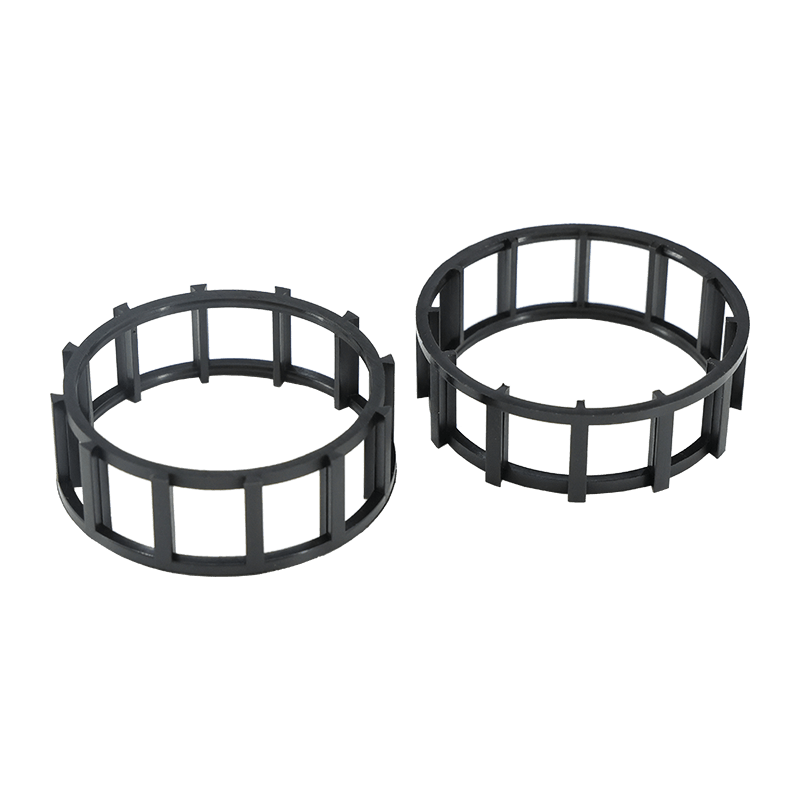
Cylindrical roller cages, for instance, require precise pocket geometry to handle high radial loads. A supplier who already manufactures cylindrical roller bearing cages has proven tooling and molding processes that transfer well to other roller cage designs.
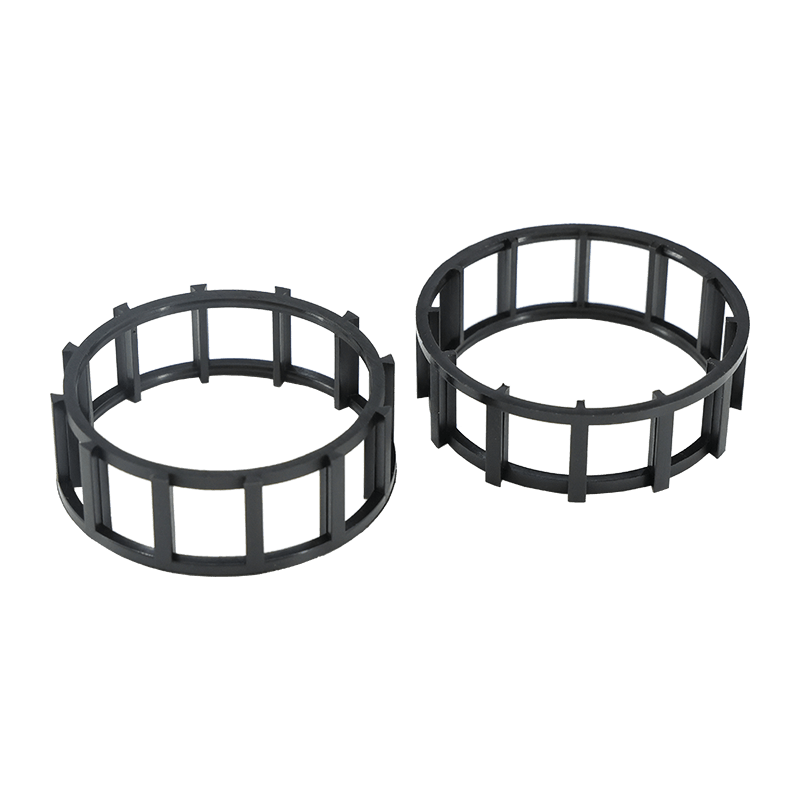 Black Plastic Cylindrical Roller Bearing Cage Suppliers, Wholesale Factory - JiaJiaxing Yiteng Intelligent Technology Co., Ltd. is Wholesale Black Plastic Cylindrical Roller Bearing Cage Suppliers and Factory in China...View Product →
It is also worth reviewing the supplier's stated positioning. A manufacturer that describes itself as a partner in nylon cage manufacturing, rather than a general plastic parts shop, is more likely to invest in the process controls that bearing cages require. You can read more about the company background on the about page.
How to Compare Quotes From Nylon Bearing Roller Cage Suppliers
When you receive multiple quotations, evaluate them against the same checklist. The table below summarizes the key evaluation criteria.
| Criterion | What to Verify | Why It Matters |
|---|---|---|
| Material grade | Specific nylon grade, glass fiber content, heat stabilization | Determines temperature range, strength, and chemical compatibility |
| Tooling ownership | In-house mold design and development capability | Faster corrections and better dimensional control |
| Quality system | ISO 9001 certification and actual inspection records | Reduces incoming rejection risk |
| Dimensional tolerances | Pocket pitch, bore, and OD measurement data | Directly affects roller guidance and bearing performance |
| Capacity and lead time | Annual output and current capacity utilization | Ensures delivery reliability during ramp-up |
| Experience | Years in production, product range, customer base | Indicates process maturity and problem-solving ability |
Source From a Supplier That Understands the Application
The lowest unit price rarely delivers the lowest total cost. Rejected batches, delayed deliveries, and field failures quickly erase any price advantage. A supplier with material knowledge, in-house tooling, a certified quality system, and demonstrated production capacity is a safer long-term choice.
For more guidance on the specific criteria that matter when selecting a needle roller cage manufacturer, read our article on plastic needle roller bearing cage manufacturer selection criteria. If you have a cage design that needs a reliable production partner, start the conversation with detailed drawings and material requirements so the supplier can give you a meaningful evaluation.