

 English
  中文简体
中文简体  عربى
عربى 
YITENG
YITENG
YITENG
YITENG
YITENG
YITENG
YITENG
YITENG
YITENG
Content
- 1 What Actually Decides Cage Life in a Needle Roller Bearing
- 2 Material Knowledge Separates Reliable Suppliers from the Rest
- 3 Mold Precision and Pocket Geometry Drive Bearing Noise and Life
- 4 Consistency Is the Real Differentiator, Not Just Certification
- 5 What to Ask Before Committing to a Production Run
What Actually Decides Cage Life in a Needle Roller Bearing
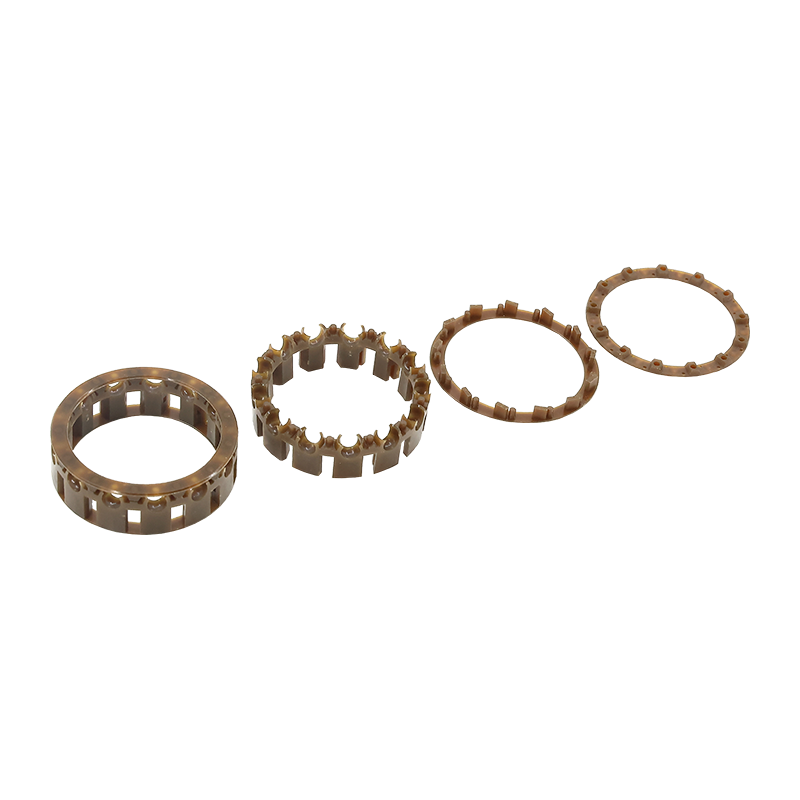
When a needle roller bearing fails early, the cause is often traced to a fractured or deformed plastic cage — not a worn raceway. The cage controls roller guidance, spacing, and lubrication flow. A cage that softens under heat, absorbs moisture and swells, or contains micro‑cracks from inconsistent molding will shorten bearing life dramatically. Material choice and manufacturing precision determine cage life far more than many purchasing departments realize. Recognizing this changes how you evaluate suppliers for plastic needle roller bearing cages.
Selecting a manufacturer isn’t just about unit price or promised lead times. It requires looking at raw‑material selection, mold engineering, process control, and the ability to prove consistency across production lots. A well‑defined evaluation framework helps procurement and engineering teams avoid the hidden costs of early‑life failures. As a specialist in nylon cage manufacturing with a mature quality system, we have seen how the right supplier attributes prevent field issues that no back‑up inventory can solve.
Material Knowledge Separates Reliable Suppliers from the Rest
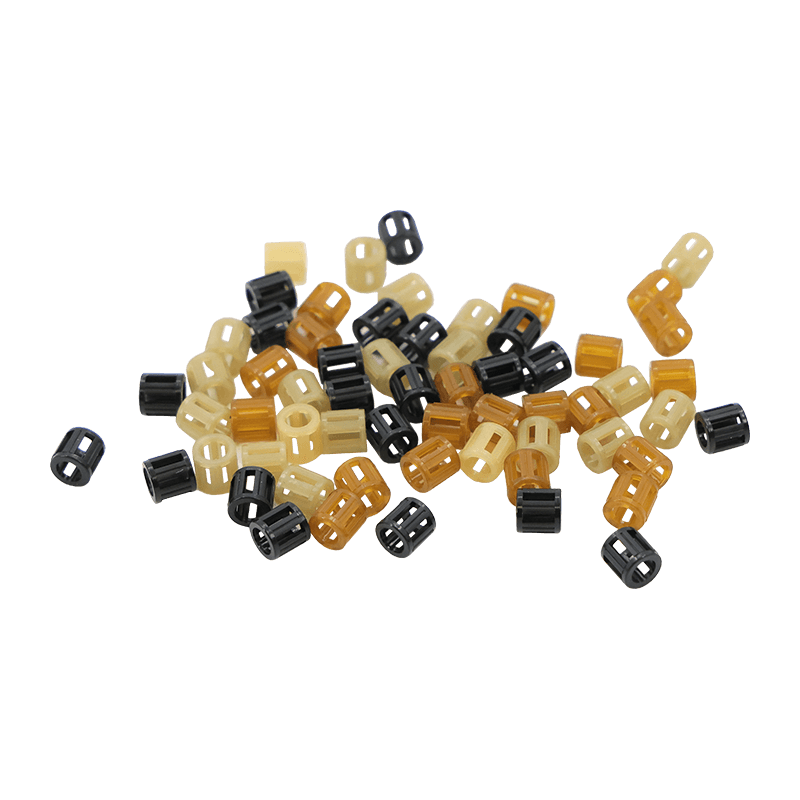
Needle roller bearing cages are molded primarily from engineering plastics — polyamide 66 (PA66) is the workhorse, often reinforced with 25–35 % glass fiber. For higher operating temperatures or aggressive lubricants, PA46, PEEK, or polyamide‑imide grades may be required. The raw material is only part of the story. How a manufacturer handles moisture conditioning, melt processing, and post‑molding annealing determines whether the finished cage meets the design intent.
A supplier that cannot discuss moisture absorption equilibrium, thermal aging resistance, or the effect of glass‑fiber orientation on pocket stiffness is likely treating the cage as a commodity part. That introduces risk. The table below compares typical material options that a competent plastic needle roller bearing cage manufacturer should offer and be able to substantiate with test data.
| Material | Typical Glass Fiber Content | Max Continuous Service Temp. | Primary Strength |
|---|---|---|---|
| PA66‑GF | 25–35 % | 120–130 °C | Cost‑effective stiffness and fatigue resistance |
| PA46‑GF | 30 % | 150–160 °C | Higher heat and chemical resistance than PA66 |
| PEEK‑GF | 30 % | 250 °C | Exceptional thermal and chemical stability |
Beyond the data sheet, a capable manufacturer will control moisture content before molding — typically below 0.2 % for PA66 — and condition finished cages to a target moisture level for dimensional stability. Overlooking this step leads to cages that are too brittle or grow in service, altering pocket clearance and roller guidance. The right supplier documents these steps, not just the final dimensions.
Mold Precision and Pocket Geometry Drive Bearing Noise and Life
In a needle roller bearing, the cage pocket size, roundness, and surface finish directly influence roller skew, friction, and noise. Even a 20‑μm deviation in pocket clearance can amplify high‑frequency vibration. A supplier that treats mold fabrication as an afterthought cannot deliver the consistency required by electric motor, gearbox, or automotive transmission applications.
Plastic needle roller bearing cage manufacturers who invest in in‑house mold design and precision machining create a tighter feedback loop between tooling and molding. A manufacturer that built its own dedicated mold development team early on — for example, establishing a full R&D team in 2014 — tends to accumulate detailed knowledge about gate location, weld‑line placement, and shrinkage compensation for complex cage geometries. That depth of know‑how translates into cages that maintain pocket accuracy from the first shot to the hundred‑thousandth.
When evaluating a potential supplier, ask how pocket roundness is verified. Is it checked with a CMM or optical measurement on a statistically significant sample from each production lot? Can the supplier correlate mold‑maintenance intervals with dimensional drift data? A manufacturer that responds with concrete measurement strategies and tolerances — not just general assurances — earns its place on a short list.
Consistency Is the Real Differentiator, Not Just Certification
An ISO 9001 certificate is a baseline expectation. What matters more is whether the quality system translates into batch‑to‑batch repeatability under real production volumes. A cage that passes a first‑article inspection but shows resin degradation in the fifth batch due to insufficient purging discipline will still cause assembly‑line rejects and field returns.
Strong plastic needle roller bearing cage manufacturers apply statistical process control to key parameters such as melt temperature, injection pressure, and holding time curves. They track lot‑level mechanical properties — tensile strength, impact resistance — and have a documented protocol for managing regrind ratios so that material properties stay within specification. A manufacturer that earned its ISO 9001 certification back in 2013 and has since expanded production capacity demonstrates that its quality culture has survived scaling, which is a meaningful signal for buyers.
When visiting a facility or auditing remotely, focus on how deviations are captured and corrected. Look for evidence of closed‑loop corrective actions, not just a clean inspection report. Proof of consistency over time reduces your incoming inspection burden far more than any single certificate.
What to Ask Before Committing to a Production Run
Turning technical requirements into a reliable supply agreement means asking pointed questions that expose a manufacturer’s true capabilities. Use these areas to structure your evaluation:
- Can the manufacturer provide full‑scale material characterization reports, including tensile modulus, moisture content before molding, and dry‑as‑molded vs. conditioned dimensional data?
- Does the mold‑flow analysis consider fiber orientation and weld‑line positioning specific to the cage design, and are actual molded parts verified against simulation?
- What is the documented process for mold‑insert inspection intervals and precision‑maintenance protocols, and how are dimensional trends monitored over tool life?
- Are samples from every production lot subjected to a defined minimum frequency of destructive and non‑destructive testing — including pocket‑clearance measurement, heat‑aging exposure, or oil‑immersion swell tests?
- How does the manufacturer manage material lot changes, and will they proactively notify you before introducing any alternate resin or additive package?
A supplier that gives detailed, data‑backed answers to these questions — and can walk you through the shop floor controls that support them — is far more likely to deliver cages that perform identically from delivery one to delivery one hundred. That level of transparency turns a transactional purchase into an engineered partnership.