

 English
  中文简体
中文简体  عربى
عربى 
YITENG
YITENG
YITENG
YITENG
YITENG
YITENG
YITENG
YITENG
YITENG
Content
Ask three industrial linear cages suppliers to quote the same double-split ball cage drawing, and you will often receive three different answers on material, pocket tolerance, and lead time. That spread is not noise; it shows exactly where cage quality and your purchasing risk actually live. So here is the conclusion first: the right supplier proves itself through pocket geometry consistency, material discipline, and in-house mold control, not through the lowest unit price. The sections below explain what these cages do, which specifications to fix before quoting, and how to separate professional cage manufacturers from the rest.
What Industrial Linear Cages Do in Linear Motion Systems
An industrial linear cage, often called a linear ball cage, ball retainer, or ball way cage, is the component that carries and spaces the rolling balls between two rails, or between a shaft and its housing, in a linear motion system. Its job looks simple: keep the balls from touching each other, hold them at even intervals along the stroke, and guide them smoothly through the load zone. In practice, this small plastic part determines how quiet, smooth, and durable the whole guide assembly feels.
When cage quality drops, the symptoms are immediate. Uneven ball spacing produces vibration you can hear on every stroke. Rough pocket walls scrape the balls and generate wear debris that attacks the rails. A cage that swells with moisture or heat starts to bind between the rails and drag. Builders of automation equipment, textile machinery, measuring instruments, and machine tools all encounter these failures when cages are sourced on price alone.
The most common configuration for general industrial use is the double-split design, where the cage runs as two parallel strips with ball pockets formed between them. The product below is a useful reference point: it shows the geometry most buyers start from, with a defined pocket pitch, a matched ball diameter, and a strip width sized to the rail system.
double-split standard linear motion ball cage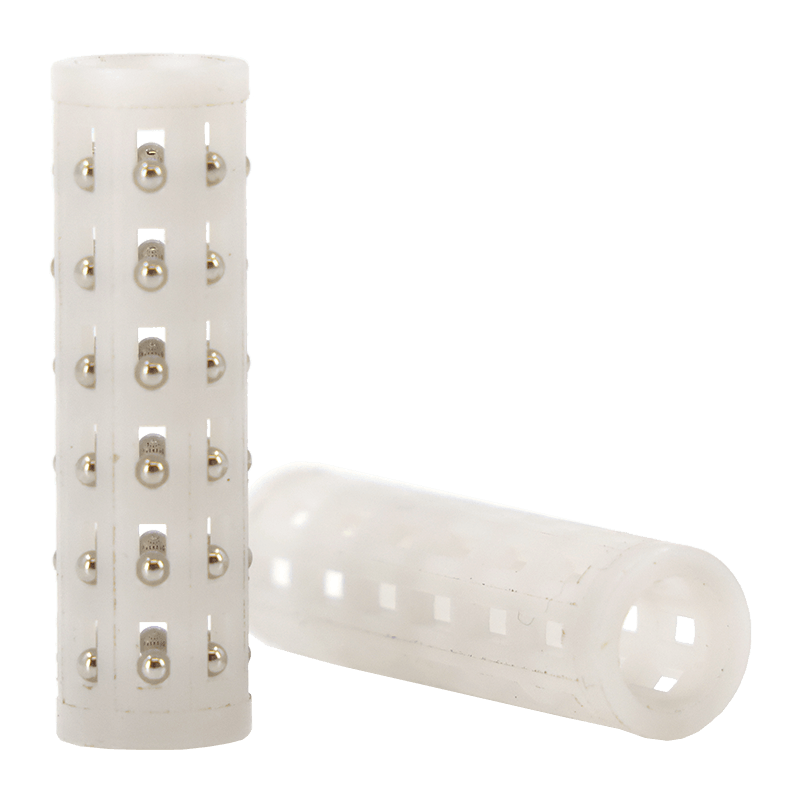 Nylon Linear Motion Ball Cage in Split and Standard TypesThis nylon linear ball cage shows the double-split configuration most buyers reference when quoting, with defined pocket pitch, matched ball diameter, and strip width sized to the rail system, making it a useful baseline before fixing drawing details.View Product →
Specifications to Confirm Before Requesting a Quote
Most quoting disputes trace back to drawings that leave too much open to interpretation. Before you request prices, fix the following items and state them explicitly on the drawing or in your request for quotation.
Material selection
Standard choices are PA66 nylon, POM (acetal), and glass-fiber reinforced grades of both. Nylon offers toughness and good wear behavior but absorbs moisture, which shifts dimensions slightly over time. POM absorbs far less moisture and slides well, so it suits applications where dimensional stability matters most. Glass fiber raises stiffness and temperature resistance, though a poorly chosen grade can increase ball wear. Tell the supplier your operating temperature, load, speed, and contamination environment, then ask them to state the material grade in writing.
Pocket pitch and geometry
Pocket pitch, the distance between pocket centers, must match the ball diameter and the rail groove or hole pattern. It is the most sensitive dimension on the cage: pitch errors that look trivial on paper appear as audible noise and visible vibration in the assembled guide. When samples arrive, measure pitch at several positions along the strip rather than only at the ends.
Tolerances, temperature, and quality system
The table below summarizes the items that matter most in a typical industrial purchase.
| Specification Item | Typical Options | Why It Matters |
|---|---|---|
| Cage material | PA66, POM, glass-fiber reinforced grades | Sets wear rate, noise behavior, dimensional stability, and temperature ceiling |
| Pocket pitch | Matched to ball diameter and rail pattern | Uneven pitch appears as vibration and noise in the assembled guide |
| Dimensional tolerances | Per drawing; pocket spacing is usually the tightest callout | Errors cause binding, sloppiness, or uneven ball loading |
| Operating temperature | Up to roughly 100°C for standard nylon grades | Sustained overheating softens the cage and shortens service life |
| Quality system | ISO 9001 certified manufacturing | Signals documented process control rather than verbal promises |
How to Evaluate Industrial Linear Cages Suppliers
Once the specification is complete, evaluation shifts from the part to the factory behind it. Three areas separate professional cage manufacturers from trading offices and general mold shops.
In-house mold development
The mold is where cage quality is decided. Pocket geometry, surface finish, and shrinkage compensation are all fixed at the mold stage, and a supplier that designs and maintains its own molds can correct problems quickly, iterate on custom drawings, and hold consistency across reorder after reorder. A supplier that outsources tooling often cannot explain why two batches behave differently. Jiaxing Yiteng set up a dedicated R&D team for mold development and new product design in 2014; that is the kind of capability worth asking any candidate supplier to demonstrate in person.
Process control and traceability
Ask how incoming resin is verified, whether cavity numbers are tracked through molding, and how dimensional checks are recorded. A certified quality management system matters here because documentation discipline is what keeps batch 100 identical to batch 1. Manufacturers that have operated under ISO 9001 for more than a decade, as Jiaxing Yiteng has since 2013, have usually built these habits into daily production rather than treating certification as paperwork.
A manufacturer producing many cage types on the same molding and inspection infrastructure sends a useful signal: its process is repeatable, not a lucky single-part run. As you review a supplier's catalog, check how the same discipline extends to adjacent lines such as the one below.
deep-groove thin-walled ball bearing cage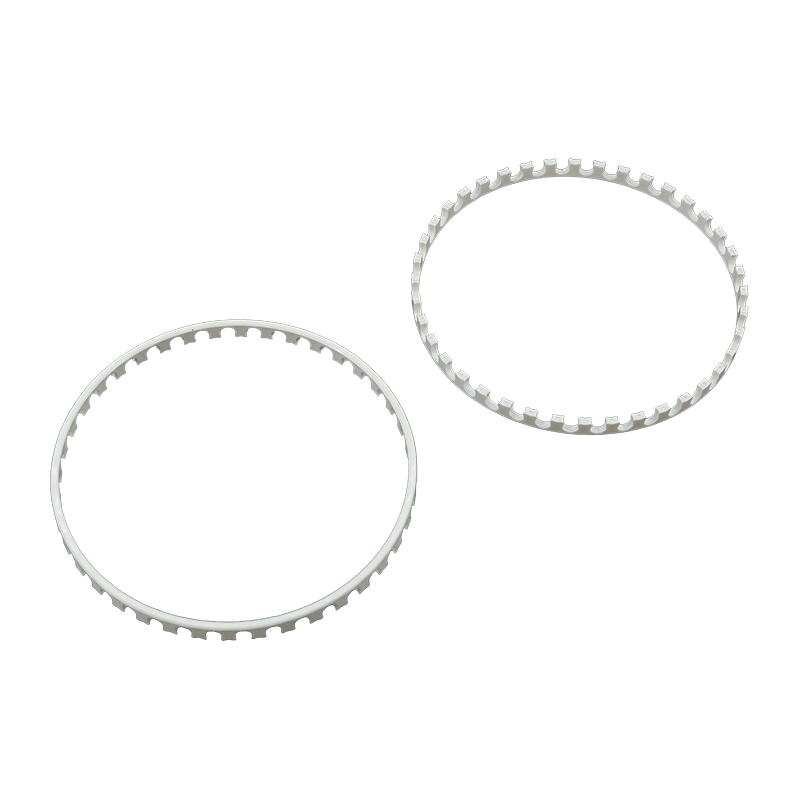 Plastic Deep Groove and Thin Section Ball Bearing CageProduced on the same molding and inspection infrastructure as linear cages, this plastic cage line for deep groove and thin-walled bearings signals repeatable manufacturing discipline, worth reviewing when assessing a supplier's consistency beyond a single part.View Product →
For a fuller framework on this step, our article on plastic ball bearing cage factory selection beyond price walks through the same evaluation logic from the buyer's side.
Common Purchasing Risks and How to Avoid Them
First-time buyers of linear cages tend to meet the same four problems. Each has a straightforward defense if you set it up before the order.
- Material substitution: the delivered cage uses a cheaper resin than agreed. Defense: require the material grade on the purchase order and confirm it with a density check on incoming samples.
- Pitch inconsistency along the strip, which produces guide noise that only appears after assembly. Defense: measure pocket pitch at several positions on samples from each batch and define the acceptable deviation on the drawing.
- Batch-to-batch dimensional drift, common when molds wear or process parameters float. Defense: keep approved golden samples and require first-article inspection on every new batch.
- Mold ownership disputes that lock you to one supplier. Defense: agree in writing who owns the tooling and what happens if you move production.
These checks take a few days of effort, and they prevent the most expensive failure mode in cage sourcing: a defect discovered after your machines are assembled and shipped.
Working with a Specialized Cage Manufacturer
There is a reason experienced buyers prefer specialized cage manufacturers over general plastics vendors. Cage production rewards narrow, accumulated expertise: knowing how a nylon grade shrinks in a thin-walled pocket, how gate location affects pocket alignment, and how to hold pitch over a strip several hundred millimeters long. Jiaxing Yiteng Intelligent Technology has been on that learning curve since 2009, when it operated as the Jiaxing Weida plastics factory, and it expanded production capacity in 2018 to serve growing industrial demand. The same capabilities support thrust designs for axial load positions, including the product line below.
thrust ball and large steel ball cage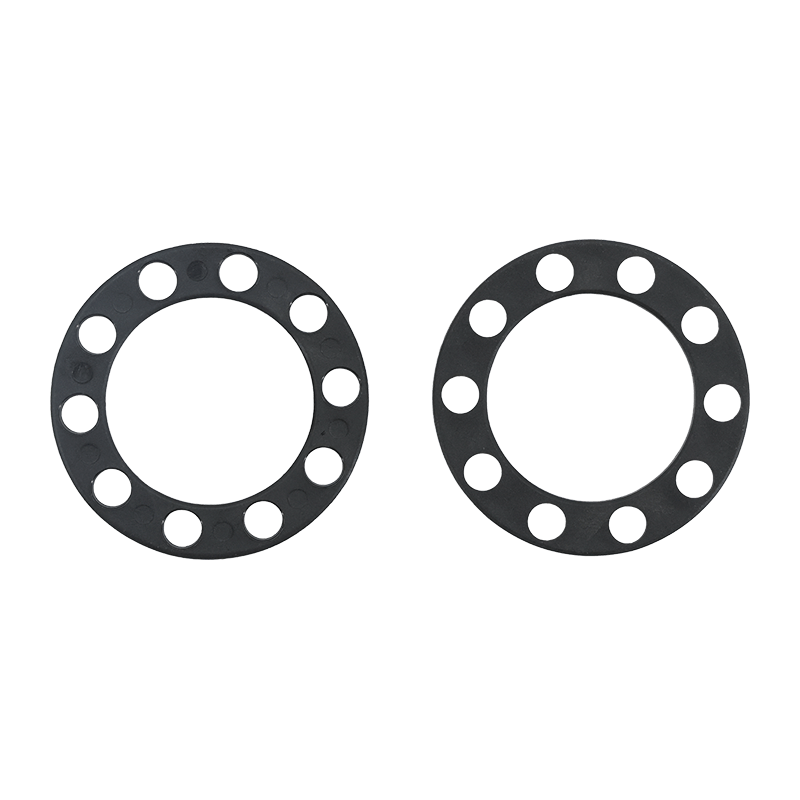 Plastic Thrust Ball Cage for Axial Load ApplicationsThis thrust ball cage line demonstrates how the manufacturer's cage expertise extends to axial load positions, covering large steel ball guidance with precise pocket geometry, and shows why sourcing matched cages from one molder keeps materials and tolerances consistent.View Product →
That range matters because real projects rarely need a single part. A machine builder specifying linear cages usually needs matched cages for rotary bearings elsewhere in the same assembly, and sourcing both from one molder keeps material, tolerances, and communication under one roof. You can review the company's background, certifications, and development history on its about page.
The practical takeaway is simple. Shortlist industrial linear cages suppliers who document their materials, show measured pocket data on real samples, state their mold ownership terms, and describe their quality system in concrete, verifiable terms. Order samples, run them on your own rails, and only then negotiate volume pricing. Suppliers who welcome that process are built to act as long-term partners in cage manufacturing; suppliers who resist it have already told you what you need to know.