

 English
  中文简体
中文简体  عربى
عربى
YITENG
YITENG
YITENG
YITENG
YITENG
YITENG
YITENG
YITENG
YITENG

Automotive Plastic Bearing Cage Manufacturers
-
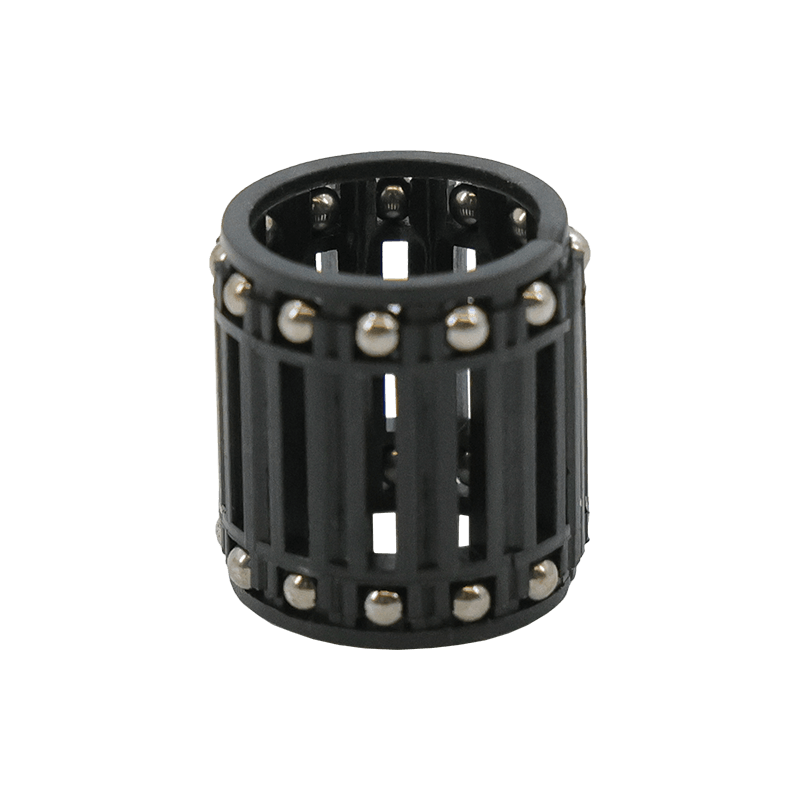

6V40 Automotive Gear Shift Bearing Cage
-
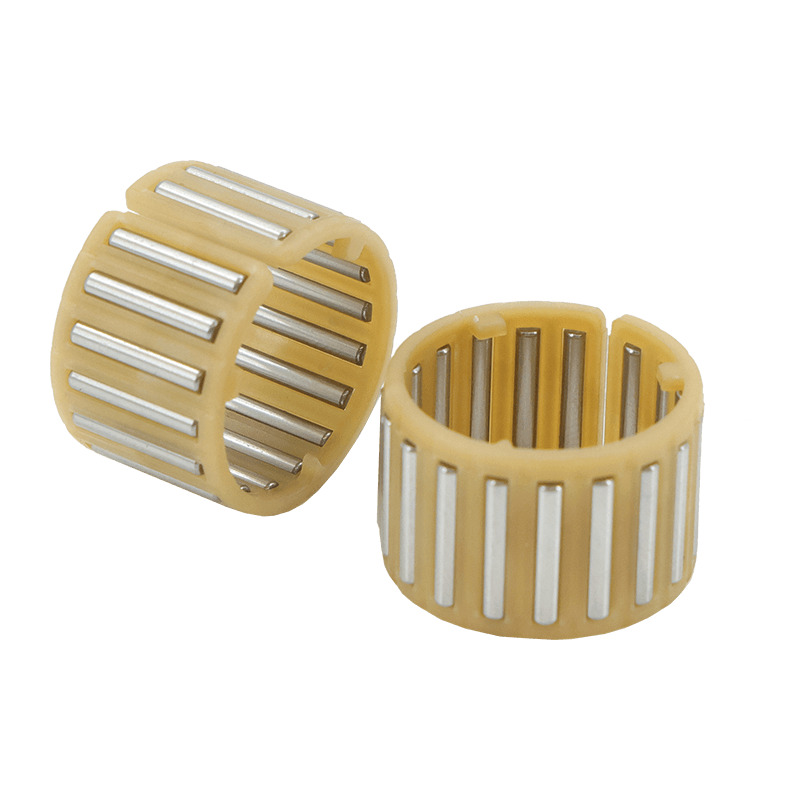
Automotive Eccentric Bearing Cage
-
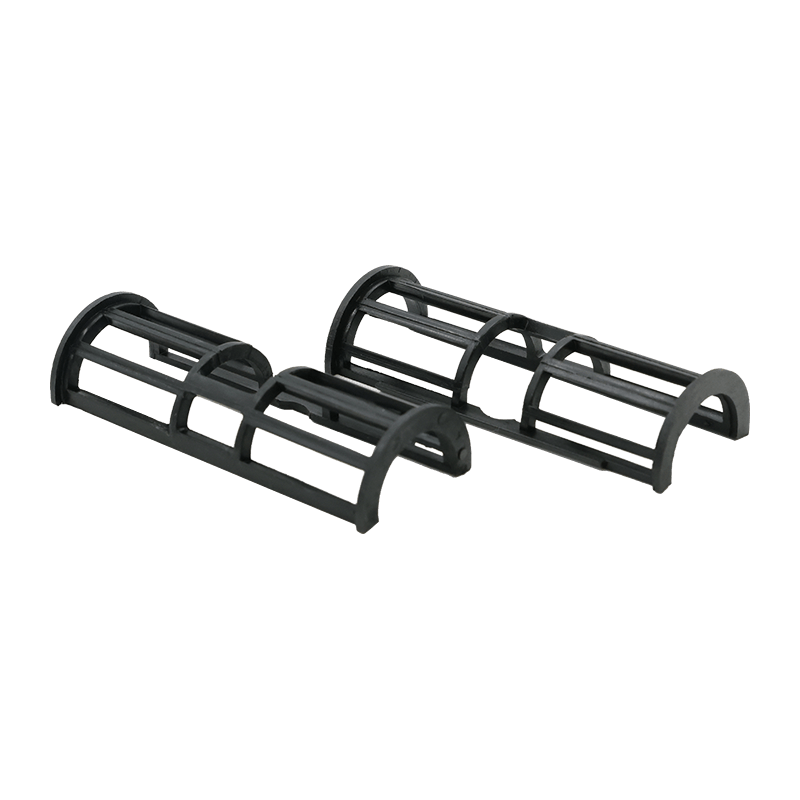
Automotive Plastic Half-Round Bearing Cage
-
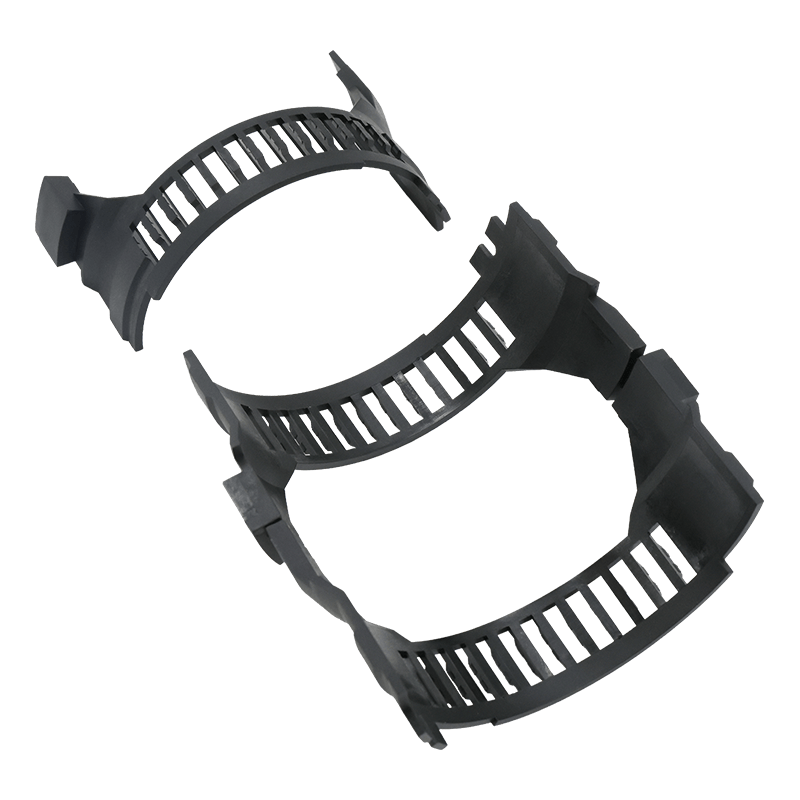
Crescent Automotive Plastic Bearing Cage
Automotive Bearing Cage range is developed specifically for the demands that vehicle applications place on this critical component — demands that are fundamentally different from general industrial bearing environments. Automotive cages must perform across extreme temperature cycles, from cold start conditions at sub-zero ambient temperatures to sustained high-temperature operation in transmission sumps and engine bays.
They must resist the chemical environment of modern lubricants, transmission fluids, and fuel-contaminated oil. They must survive the vibration spectra generated by combustion engines, road surfaces, and drivetrain torque fluctuations — maintaining dimensional integrity and rolling element guidance precision through load cycles that accumulate into the billions over a vehicle service life. And they must do all of this within bearing envelopes that automotive packaging constraints have made progressively smaller, lighter, and more geometrically demanding with every generation of vehicle development.
The range addresses this diversity of application requirements through a portfolio of cage geometries and material specifications — each engineered for the specific mechanical reality of its target application. Standard full-ring designs serve high-volume powertrain and wheel bearing positions.
Eccentric cage geometries manage the asymmetric load patterns of variable valve timing and steering actuator bearings.
Half-round and crescent profiles solve the packaging and installation challenges of split-housing and defined load-zone applications. Each geometry is not a variation on a common template — it is a purpose-built response to a specific set of automotive engineering constraints.
Manufactured to automotive-grade dimensional tolerances, produced under quality systems aligned with OEM supplier requirements, and engineered with material specifications verified for powertrain chemical and thermal environments.
About Us
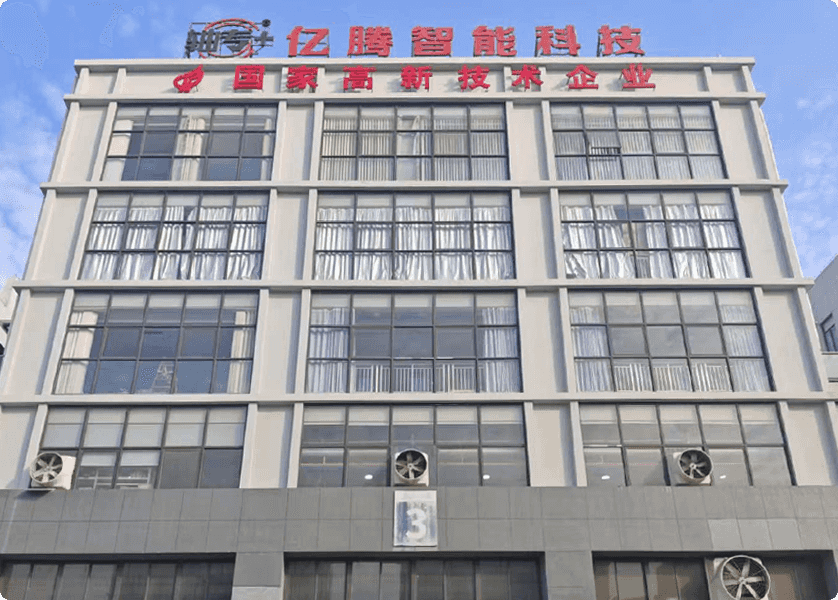
Jiaxing Yiteng Intelligent Technology Co., Ltd.
Jiaxing Yiteng Intelligent Technology Co., Ltd. is a manufacturer specializing in the production and processing of nylon cages, bearing cages, and other related products. Automotive Bearing Cage Manufacturers and Automotive Plastic Bearing Cage Suppliers. The company has a manufacturing tradition of over ten years since 2009, providing not only high-quality nylon cages and bearing components. We offer partnerships. Whether you are a global bearing OEM or a specialized distributor, our team adapts to your workflow. We combine our deep expertise in engineering plastics with a responsive, solutions-oriented mindset to reduce your procurement risk and enhance product performance. Our company maintains a complete and scientific quality management system. Jiaxing Yiteng Intelligent Technology Co., Ltd. has earned recognition within the industry for its integrity, strong capabilities, and product quality. Custom Automotive Plastic Bearing Cage. We welcome friends from all walks of life to visit, provide guidance, and discuss business cooperation!
Message Feedback
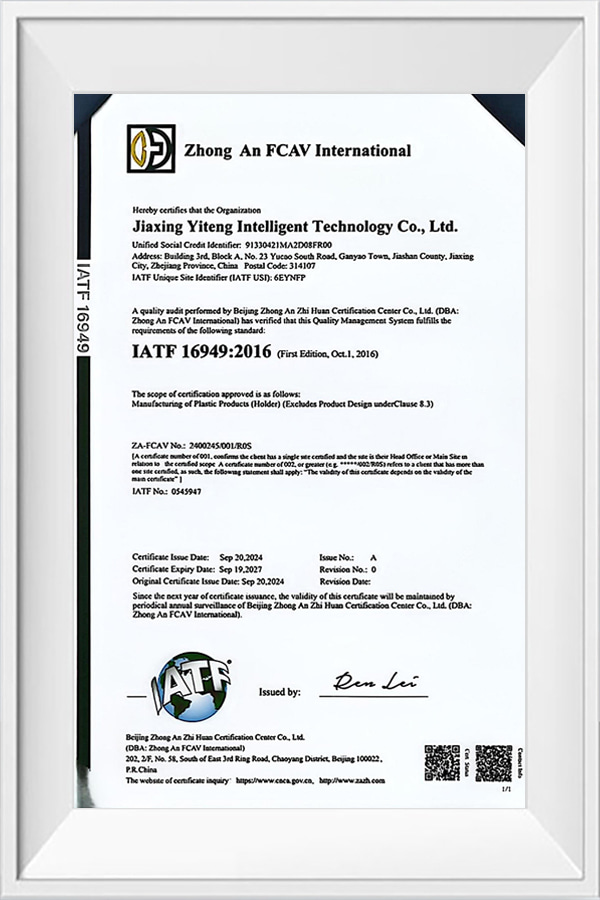
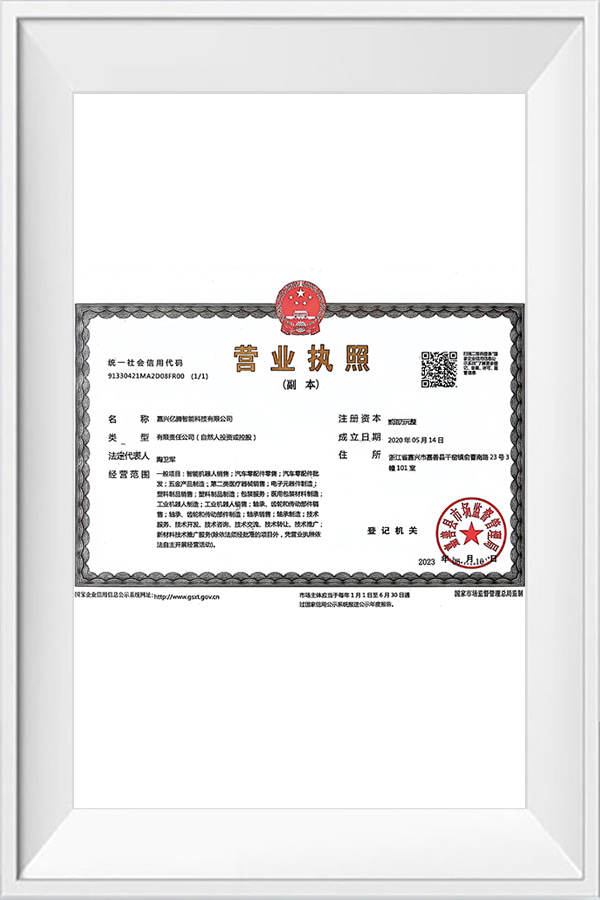
Certificate Of Honour
News Center
-

 Industry News
 2026.10.15
If you have ever taken apart a small electric motor, a gear shift mechanism, or a conveyor idler, you have probably seen bearing staking without recognising it. A few small dents around a bore, a flattened rivet head, a deformed plastic boss — these are the visible traces of a joining process that ...VIEW MORE
2026.10.15
If you have ever taken apart a small electric motor, a gear shift mechanism, or a conveyor idler, you have probably seen bearing staking without recognising it. A few small dents around a bore, a flattened rivet head, a deformed plastic boss — these are the visible traces of a joining process that ...VIEW MORE
-
Industry News
2026.10.10
Running torque is one of those numbers that looks simple on a specification sheet and turns complicated the moment you try to use it. Ask three engineers what it means and you will get three slightly different answers: the drag you feel when you spin a bearing by hand, the steady torque a motor has...VIEW MORE
-
Industry News
2026.09.30
Ask a maintenance engineer what keeps a self-aligning bearing out of trouble, and the answer is usually raceways and lubrication. Ask a cage maker, and the answer sounds a little different. The spherical cage is the part that holds every roller or ball in its own pocket, at a controlled distance, w...VIEW MORE
Industry knowledge
Industry Knowledge
Material Selection Criteria for High-Temperature Automotive Applications
Automotive bearing cages operate in environments where engine bay temperatures, transmission fluid exposure, and continuous rotational stress can quickly degrade the wrong polymer choice. Selecting a material is not simply a matter of picking the highest heat-resistant option available; it requires balancing thermal stability, dimensional consistency under load, and long-term fatigue resistance against cost and moldability. For procurement teams evaluating suppliers, understanding how common engineering plastics compare on these axes helps avoid premature field failures and warranty claims.
| Material | Continuous Service Temp | Typical Use Case |
| PA66 (glass-filled) | 120°C - 150°C | Wheel hub bearings, general drivetrain |
| PA46 | 150°C - 180°C | Alternator and starter bearings |
| PPS | 200°C+ | Turbocharger-adjacent, EV motor bearings |
Glass fiber reinforcement percentage also matters more than most buyers initially assume. A 30% glass-filled PA66 cage offers meaningfully higher creep resistance than a 15% filled version, but at the cost of increased brittleness at low temperatures. Suppliers who can adjust fill ratio per application, rather than offering a single fixed formulation, typically deliver better long-term performance matching for OEM programs with varied climate exposure requirements.
Dimensional Tolerance and Fit Control in Injection-Molded Cages
Cage pocket geometry directly determines how freely rolling elements move and how evenly load is distributed during operation. Because plastic cages are produced through injection molding rather than machining, tolerance control depends heavily on mold design discipline, shrinkage prediction, and post-mold dimensional verification rather than cutting-tool precision alone.
Radial Clearance Management
Radial clearance between the cage and rolling elements affects both noise levels and long-term wear patterns. Too tight a clearance increases friction and heat generation; too loose a clearance allows element skidding, which accelerates surface wear on both the cage pockets and the balls or rollers themselves. Mature manufacturers typically hold pocket clearance within a narrow, application-specific band validated through sample runs rather than relying purely on CAD-calculated shrinkage rates.
Warpage and Post-Mold Stabilization
Semi-crystalline polymers like PA66 and PA46 continue to shrink slightly after ejection as internal stresses relax. Cages that skip a post-mold conditioning or annealing step can shift out of tolerance days after production, passing initial inspection but failing dimensional checks at the customer's incoming QC. Requesting a supplier's post-mold stabilization procedure is a practical way to assess whether their process accounts for this delayed dimensional drift.
Common Failure Modes and Their Root Causes
Understanding how plastic cages typically fail in service helps buyers ask more targeted qualification questions during supplier evaluation, rather than relying solely on generic material datasheets.
- Pocket cracking under cyclic load, usually traced to inadequate rib thickness at the pocket base or insufficient glass fiber orientation control during molding
- Chemical attack from certain synthetic lubricants containing additives incompatible with the base polymer, leading to embrittlement over time
- Thermal degradation from prolonged operation near or above the material's heat deflection temperature, causing gradual loss of dimensional rigidity
- Fatigue fracture at gate or weld line locations where melt flow fronts meet during molding, creating localized weak points
Weld line placement in particular is often overlooked during early supplier discussions but has an outsized effect on cage durability. Mold flow simulation prior to tooling can reposition weld lines away from high-stress pocket areas, and asking whether a supplier runs this simulation step is a reasonable way to gauge their engineering maturity.
Validation Testing Before Mass Production Release
Before a new cage design enters volume production, a structured validation sequence reduces the risk of field failures that are far more costly to address after vehicle integration than during the sampling phase.
- Dimensional CMM inspection across a statistically meaningful sample size, not just first-article parts
- Thermal aging cycles simulating years of underhood or transmission exposure within a compressed test window
- Endurance run testing on an actual bearing assembly under representative load and speed conditions
- Chemical compatibility testing against the specific lubricant grade the end application will use
Buyers sourcing for regulated automotive programs should request raw test data and reports rather than summary pass/fail statements, since underlying trend data often reveals early warning signs of marginal designs that a simple pass result would otherwise mask.
Transitioning from Metal to Plastic Cages in Existing OEM Programs
Programs originally designed around stamped steel or machined brass cages face specific engineering considerations when evaluating a switch to plastic. Weight reduction and noise dampening are the most commonly cited motivations, but the transition also changes assembly tolerances, since plastic cages typically require slightly different press-fit or snap-fit assembly parameters than their metal counterparts.
A phased qualification approach works better than a direct one-to-one material swap. This usually involves first validating the plastic cage in a drop-in configuration matching existing bearing dimensions, then, once performance is confirmed, exploring pocket geometry optimizations that take advantage of plastic's greater design freedom, such as integrated snap features that reduce the number of separate components in the bearing assembly.
Traceability Systems for Automotive Supply Chain Compliance
Automotive-grade components increasingly require full batch traceability, tying each finished cage back to raw material lot numbers, molding parameters, and inspection records. This is not just a compliance formality; it becomes critical during root-cause investigations if a field issue emerges months or years after shipment.
A well-structured traceability system typically links resin lot certificates, mold cavity identification numbers, production shift and machine data, and final inspection results under a single batch code printed or laser-marked on packaging. Suppliers capable of retrieving this full chain of records within a short turnaround window during an audit demonstrate a level of process control that generic quality certificates alone cannot confirm.
Product Categories
Automotive Bearing Cages Needle Roller Bearing Cages Textile Machinery Ball Cages Industrial Ball & Linear Cages Cylindrical Roller Cages Engineering Plastic Parts & Accessories Automotive Plastic Bearing CageContact us

Phone:
+86 138 6736 9593
E-mail:
[email protected]
Address:
Building 3, No. 23 Yucao South Road, Ganyao Town, Jiashan County, Jiaxing City, Zhejiang ProvincePartner with Us for a Smarter Manufacturing Future!

Copyright © Jiaxing Yiteng Intelligent Technology Co., Ltd. All Rights
Reserved
Custom Automotive Plastic Bearing Cage
