

 English
  中文简体
中文简体  عربى
عربى 
YITENG
YITENG
YITENG
YITENG
YITENG
YITENG
YITENG
YITENG
YITENG
Content
Every bearing spec sheet lists an ABEC rating, but that single three-digit code does not tell the whole story about how a bearing will perform under load, in a dirty environment, or at high speed. For purchasing engineers and maintenance teams, the practical question is always: which ABEC rating actually fits my application? The short answer is to start with tolerances, then add the quality of the cage material and assembly.
ABEC Rating Scale: What the Numbers Really Mean
ABEC (Annular Bearing Engineering Committee) grades are set by the American Bearing Manufacturers Association and cover dimensional tolerances for radial ball bearings. The scale uses odd numbers from 1 to 9, with 9 being the tightest tolerance and 1 the loosest. A higher ABEC grade means the bearing's inner ring, outer ring, and bore are manufactured to a more precise profile.
Below is a quick reference based on published tolerance data. Keep in mind that these are simplified values for comparison; actual standards define multiple tolerance parameters.
| ABEC Grade | Tolerance (mm) | Typical Applications |
|---|---|---|
| ABEC 1 | 0.010 | Wheels, conveyors, non-critical assemblies |
| ABEC 3 | 0.007 | Pumps, textile machinery, general industrial |
| ABEC 5 | 0.004 | Automotive components, precision instruments |
| ABEC 7 | 0.0025 | Machine tool spindles, aerospace controls |
| ABEC 9 | 0.0015 | Highest speed and accuracy applications |
Selecting a higher grade does not automatically make a bearing better for every job. The tolerance grade narrows variation, but the bearing still has to be matched to the load path, speed, lubrication, and operating temperature.
What ABEC Ratings Affect and What They Do Not
The primary effect of a higher ABEC rating is reducing radial runout and internal clearance variation. This translates into smoother rotation, more precise positioning, and the ability to run at higher speeds with less vibration. That matters for machine spindles, encoders, and high-speed textile equipment.
However, ABEC ratings do not specify load capacity, material hardness, heat treatment, cage geometry, or sealed bearing designs. Two bearings with the same ABEC grade can perform very differently in the field if one uses a stamped steel cage and the other uses a precision-molded nylon cage. In many industrial applications, the cage is the component that determines how quiet and how long the bearing stays reliable.
Why Nylon Cages Matter in High-ABEC Bearings
Nylon cages offer specific advantages over metal versions. They are lighter, self-lubricating, and have good damping properties that suppress noise and vibration. These characteristics directly support the kind of smooth operation that a high ABEC rating promises but cannot deliver on its own.
For example, in a radial needle roller bearing assembly, a well-designed nylon cage locks the rollers in place consistently, preventing skewing and reducing friction. The result is a bearing that stays quiet and precise over a long service life. It is exactly why many bearing manufacturers specify nylon cages when they need to hit performance targets for automotive and textile equipment.
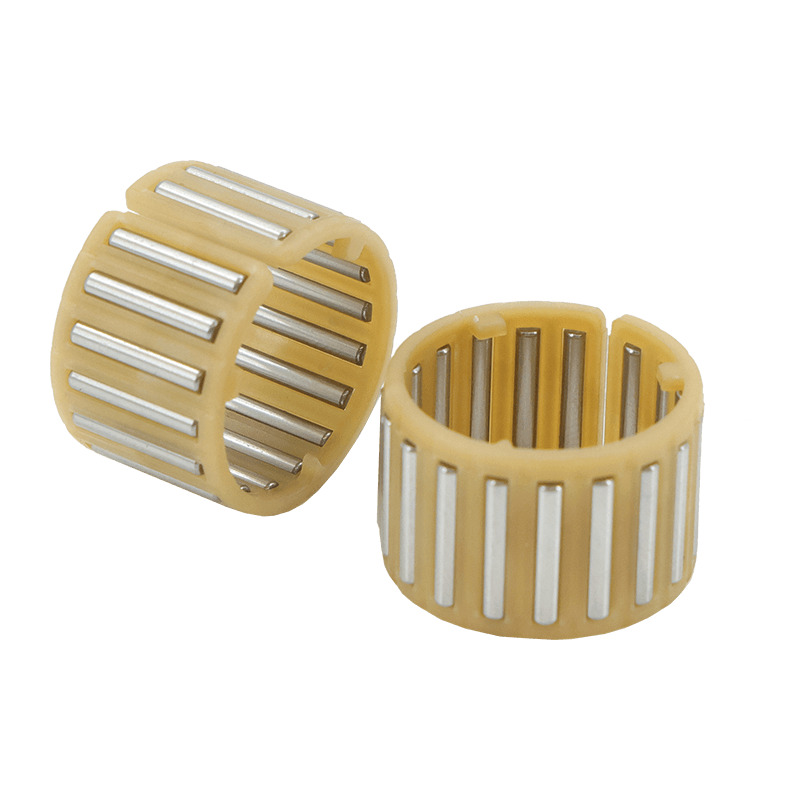
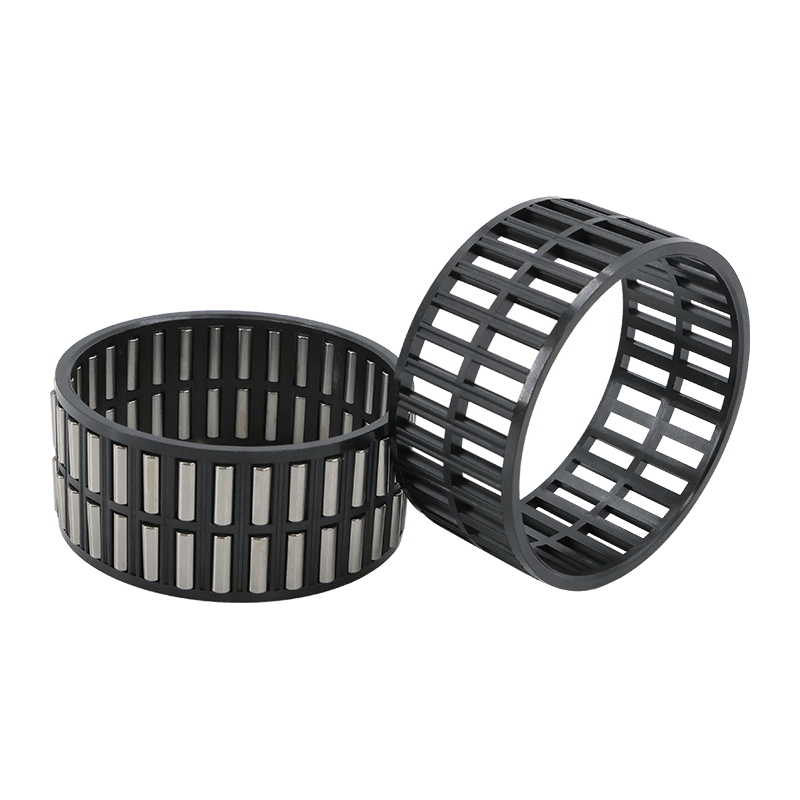 Radial Needle Roller and Cage Assembly (K/KK Series)K/KK Series Radial Needle Roller and Cage Assembly is Designed for engineers who refuse to compromise between performance and space efficiency, this assembly combines ...View Product →
Similarly, in deep groove ball bearings, a thin-walled nylon cage reduces the number of contact points and improves the distribution of lubrication. For designers working with compact bearing envelopes, this means a higher speed rating without sacrificing durability.
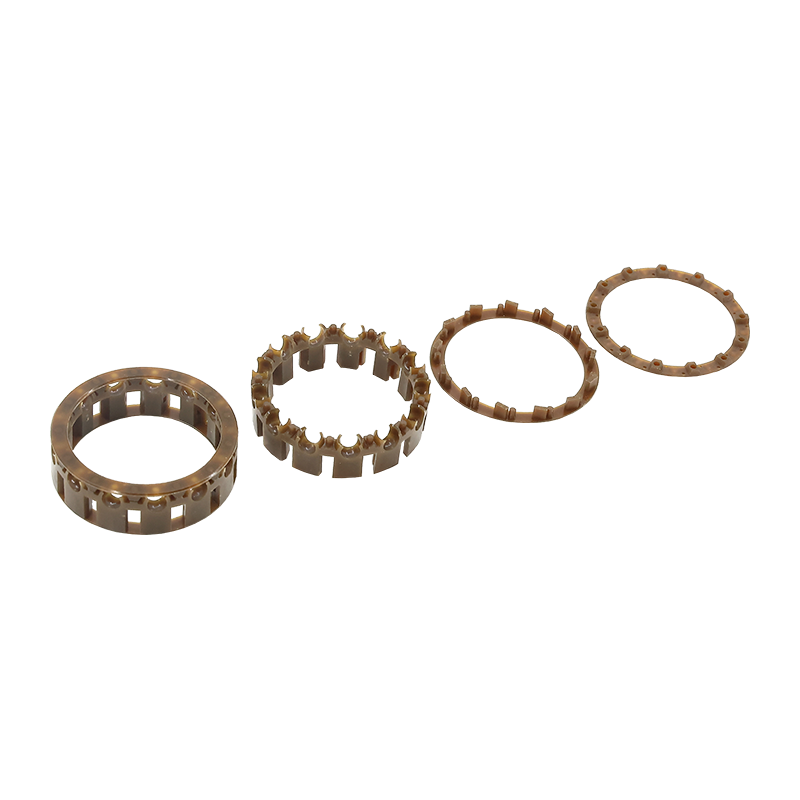
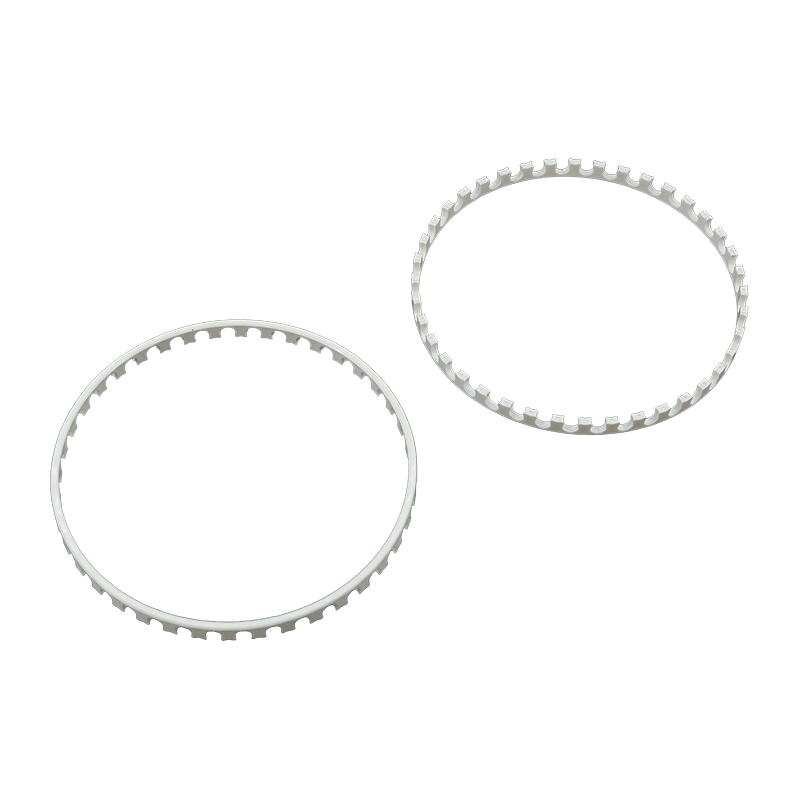 Plastic Deep Groove & Thin Section Ball Bearing CageDeep groove ball bearings are the most widely used bearing type in the world — found in electric motors, pumps, compressors, gearboxes, household appliances, and indus...View Product →
How to Choose the Right ABEC Rating for Your Application
Start with the speed requirement. The relationship between speed, bearing size, and tolerance is not linear. A bearing that runs at several thousand RPM will need at least an ABEC 5 grade to avoid excessive vibration. For machine tools operating above 20,000 RPM, ABEC 7 or 9 may be required.
Next, look at the load type and direction. High radial loads favor cylindrical or roller bearings, while pure axial loads often point to thrust bearings. The cage material must be able to handle those loads. In one case, a cylindrical roller bearing with a glass-fiber reinforced nylon cage handled heavy industrial loads while running quieter than a conventional steel-cage version.
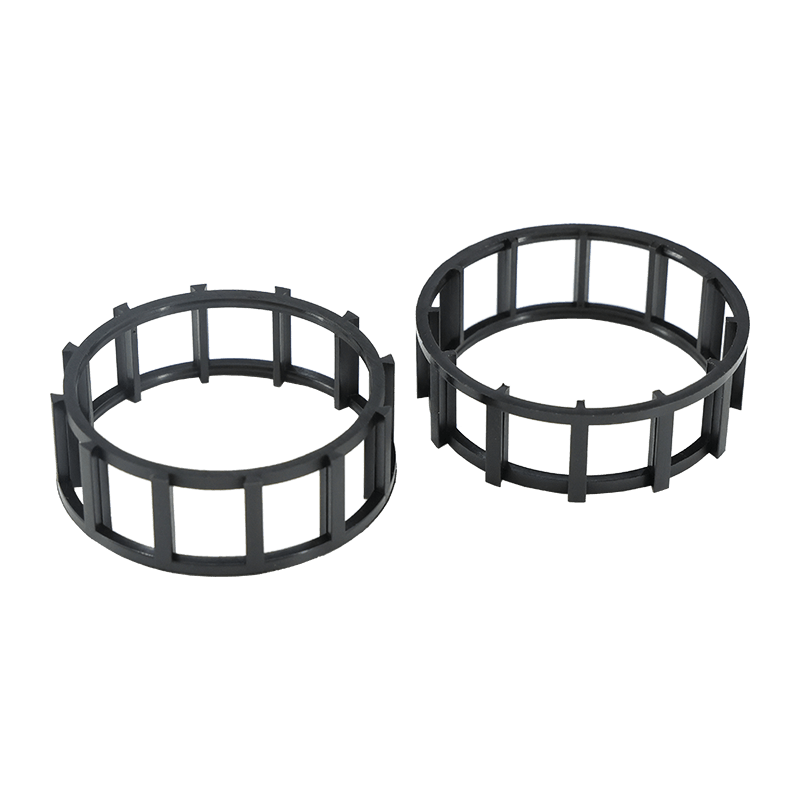
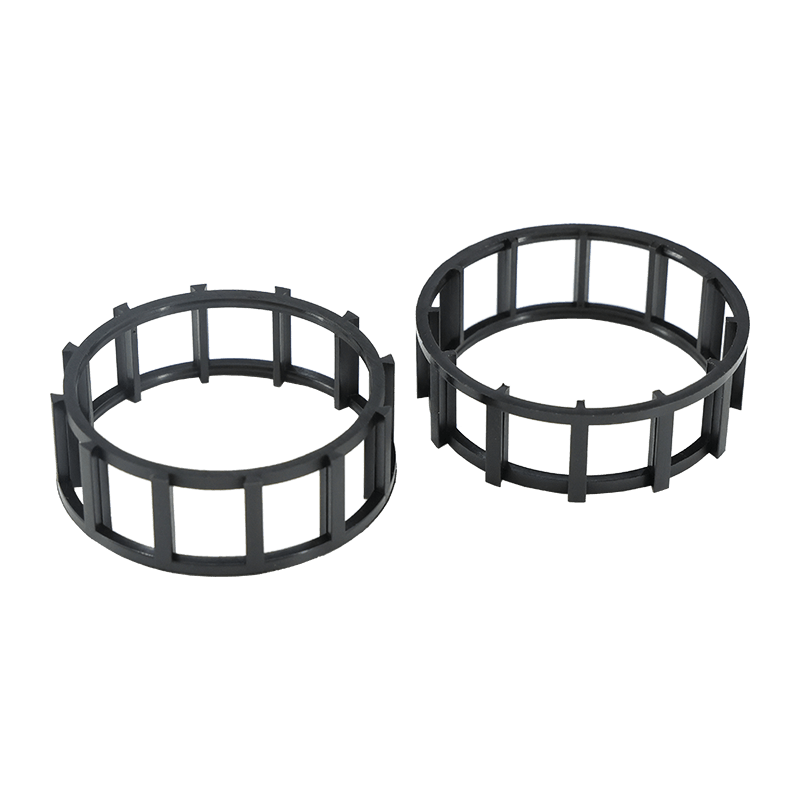 Black Plastic Cylindrical Roller Bearing CageThe NJ series standard cylindrical roller bearing cage is a key precision component for achieving this performance—it maintains precise roller spacing, guides each rol...View Product →
Finally, consider the environment. If the application involves dust, moisture, or chemicals, the cage material's resistance to those elements becomes as important as the tolerance grade. Nylon cages can be formulated with different fillers to improve chemical resistance, which gives engineers another way to adapt the bearing to the job.
Practical Considerations for Bearing Buyers
When specifying a bearing, review the ABEC grade alongside the actual dimensional tolerances, but also ask about the cage type, material, and how the bearing is assembled. A manufacturer with in-house tooling and molding capabilities can control the cage quality directly, which is a critical advantage for consistency.
Demand a quality management system. A supplier that has completed ISO 9001 certification demonstrates a structured process for inspection and traceability. Our own company has passed through that process since 2013, and the discipline it brings is visible in every batch of nylon cages we produce.
For more on vetting a plastic cage manufacturer, see this guide to selecting a plastic ball bearing cage factory. Pricing is only one factor; production capability, mold development, and quality consistency matter just as much.
In summary, ABEC ratings give you a useful starting point for understanding precision, but they do not define the complete performance envelope. A bearing with a high ABEC grade and a weak cage design will disappoint in the field, while a properly matched nylon cage can make a modest ABEC grade stand up to demanding industrial duty. When you are comparing bearing ratings, link the tolerance class to the cage material and the application conditions, and you will make a more reliable purchase decision.