

 English
 中文简体
 عربى

YITENG
YITENG
YITENG
YITENG
YITENG
YITENG
YITENG
YITENG
YITENG
Content
- 1 What Running Torque Actually Measures
- 2 Running Torque vs. Breakaway Torque
- 3 What Changes Running Torque in a Real Assembly
- 4 How to Measure Running Torque Without Fooling Yourself
- 5 Why the Bearing Cage Plays Such a Large Role
- 6 Cylindrical Roller Cages: Fit and Guidance Set the Drag
- 7 Linear Motion Cages and Low-Drag Sliding Systems
- 8 Design and Assembly Habits That Keep Running Torque Predictable
- 9 Questions We Hear From Engineers
Running torque is one of those numbers that looks simple on a specification sheet and turns complicated the moment you try to use it. Ask three engineers what it means and you will get three slightly different answers: the drag you feel when you spin a bearing by hand, the steady torque a motor has to supply after start-up, or the resistance a self-locking nut keeps on a bolt thread.
All of those answers point at the same idea. Running torque is the torque needed to keep something moving once it is already in motion. It is the friction bill you pay continuously, rather than the one-time cost of getting things started. For anyone specifying bearings, cages or threaded joints, that distinction separates a design that works on paper from one that works on the shop floor.
What Running Torque Actually Measures
In mechanical terms, running torque is the turning effort required to overcome friction and other internal resistance while an assembly rotates or translates at a steady rate. Different industries use different names for it, such as friction torque, drag torque or kinetic torque, but the measurement is the same in spirit: hold the assembly in motion and record how much torque it takes to keep it there.
Units are ordinary torque units. Metric drawings tend to use newton metres or millinewton metres, while North American drawings often use ounce-force inches and pound-force inches. Small instrument bearings are frequently quoted in millinewton metres, and a locking fastener is more likely to be quoted in newton metres. Because torque is force multiplied by distance from the axis, a value only means something when the reference radius or the test method is stated with it.
One clarification prevents most arguments: running torque is not the torque that performs useful work. It is the parasitic portion, and the drag component is the part that later shows up as heat, noise and wasted power.
Running Torque vs. Breakaway Torque
The number most often compared with running torque is breakaway torque, also called starting torque or static torque. Breakaway torque is what it takes to get a stationary assembly moving from rest. Running torque is what it takes to keep it moving. On most machines the first is noticeably higher than the second, and the reason sits in friction itself.
When two surfaces rest against each other, microscopic high points settle into contact and the junctions that form must be sheared before sliding can begin. Once motion starts, those junctions break and reform continuously and the average resistance drops. It is the same effect you feel pushing a loaded cart: the first shove is the hard part, and then it rolls.
| Characteristic | Breakaway torque | Running torque |
|---|---|---|
| State of motion | At rest, motion just beginning | Already moving at steady speed |
| Dominant friction | Static friction | Kinetic friction |
| Typical magnitude | Higher, sometimes several times the running value | Lower and steadier |
| Main influences | Surface adhesion, stiction, dwell time under load | Viscosity, load, speed, temperature, contamination |
| Where it shows up | Motor starting current, actuator sizing | Heat, power loss, efficiency, wear rate |
| Measurement note | Peak value on a torque trace | Steady band after the peak |
What Changes Running Torque in a Real Assembly
Running torque is not a fixed property of a component. It shifts with operating conditions, which is why two seemingly identical bearings can report different numbers on different days. A handful of factors explain most of that variation.
- Lubrication: film thickness, base oil viscosity and grease consistency decide how much metal-to-metal contact remains.
- Preload and fit: an interference fit that closes up internal clearance raises drag quickly.
- Surface finish: rougher raceways and rolling elements increase resistance on every pass.
- Speed and temperature: faster rotation increases viscous shear, while heat thins the lubricant and reduces it.
- Contamination: particles larger than the film thickness create local spikes in the torque trace.
- Cage design: material, pocket clearance, guidance method and rotating mass all contribute.
- Installation and alignment: misalignment adds a load that never appeared in the original calculation.
How to Measure Running Torque Without Fooling Yourself
If you need a number you can defend in a design review, the test method matters as much as the instrument. A short, repeatable procedure keeps the result honest.
- Define the condition first: new or run-in, dry or lubricated, and at what temperature.
- Isolate the component so that only the element under test resists rotation. Seal drag and fixture friction should not enter the reading.
- Rotate at a low, controlled speed and let the trace settle before reading a value.
- Record continuously instead of sampling a single peak. Running torque is the plateau, not the spike.
- Repeat the test after run-in and note how much the value moved, and in which direction.
- Log the conditions beside the number. A torque figure without context is difficult to compare with anyone else's data.
One habit is worth building early: keep the breakaway peak and the running plateau on the same chart. The gap between them tells you how much starting margin a drive needs, and how much of the energy budget is going into friction rather than work.
Why the Bearing Cage Plays Such a Large Role
In a rolling bearing, friction comes from several places at once: the rolling contacts, the lubricant being churned, the seals, and the contact between the rolling elements and the cage that spaces them. That last source is easy to overlook because cages look passive. They are not. A cage guides rollers, holds them at an even pitch, keeps them from skewing, and often stores lubricant right where it is needed.
A moulded nylon cage changes the running torque picture in a few practical ways. It is light, so the centrifugal load it places on the rollers stays modest. Nylon running against hardened steel produces comparatively little friction, and the pockets can be shaped to retain grease and release it gradually. Because the material is also slightly compliant, it absorbs small misalignments and vibration instead of passing them straight into the rolling contact. Pocket clearance still has to be right: too tight and drag climbs, too loose and the rollers start to skew.
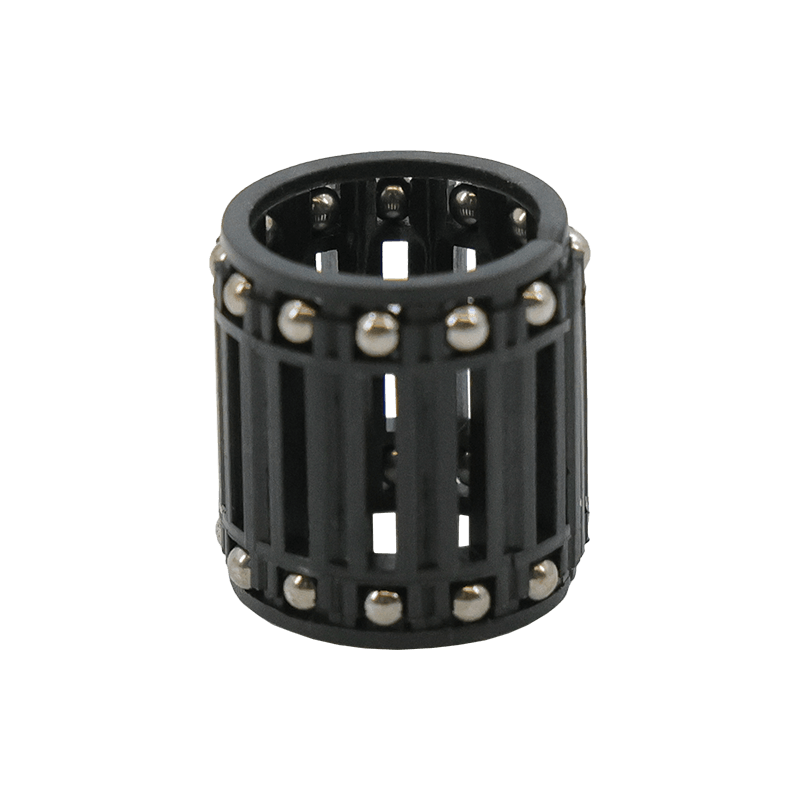
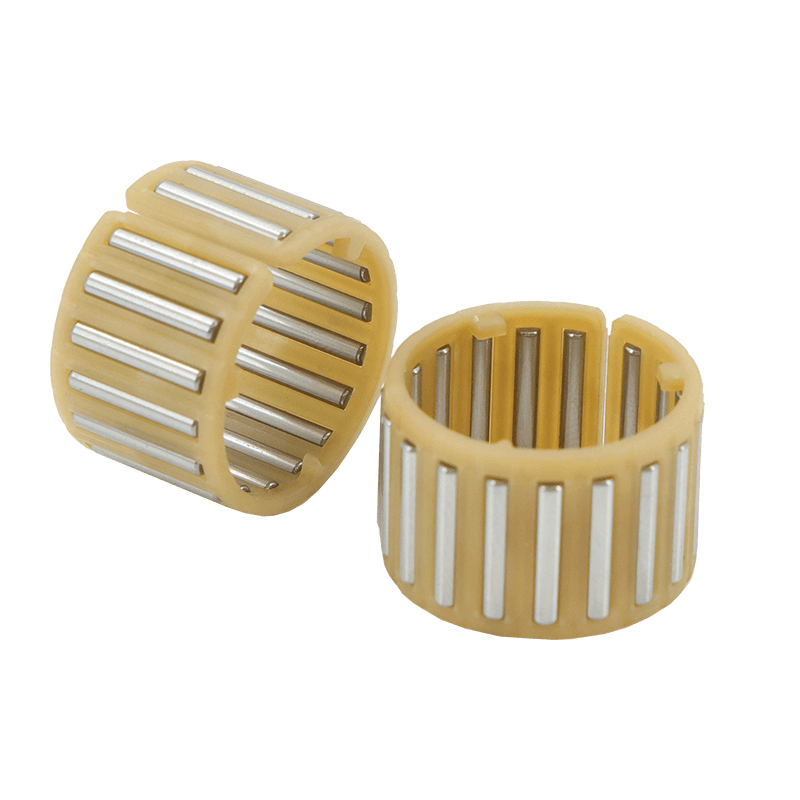
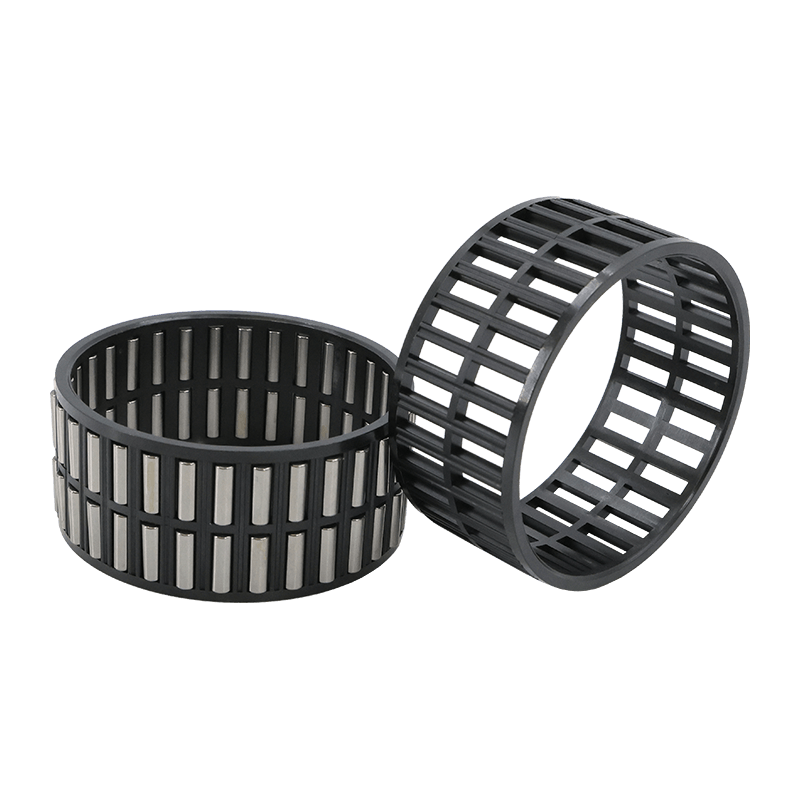 Radial Needle Roller and Cage Assembly K/KK SeriesThin-section K/KK needle roller and cage assembly with stamped steel or polymer cage; controls roller spacing and friction for compact high-load radial applications.View Product →
We have been moulding and machining cages for well over a decade, beginning as a plastics workshop and growing into a dedicated cage manufacturer. You can read more about our manufacturing background if you would like the longer version, but the short one is this: cage geometry and material choice are where running torque is either designed in or designed out.
Cylindrical Roller Cages: Fit and Guidance Set the Drag
Cylindrical roller bearings behave differently from ball bearings because the roller-to-raceway contact is a line rather than a point. That line contact carries heavy radial loads well, and it also means the cage has more work to do in keeping rollers parallel. The cage guides the rollers along the ribs or inside the pockets, and the clearance in that guidance shows up directly in drag.
When running torque readings drift upward in a cylindrical roller assembly, the cause is often a fit that has closed up more than the drawing allowed, or a cage pocket that is not letting the roller align naturally under load. Checking both before changing the lubricant usually saves time.
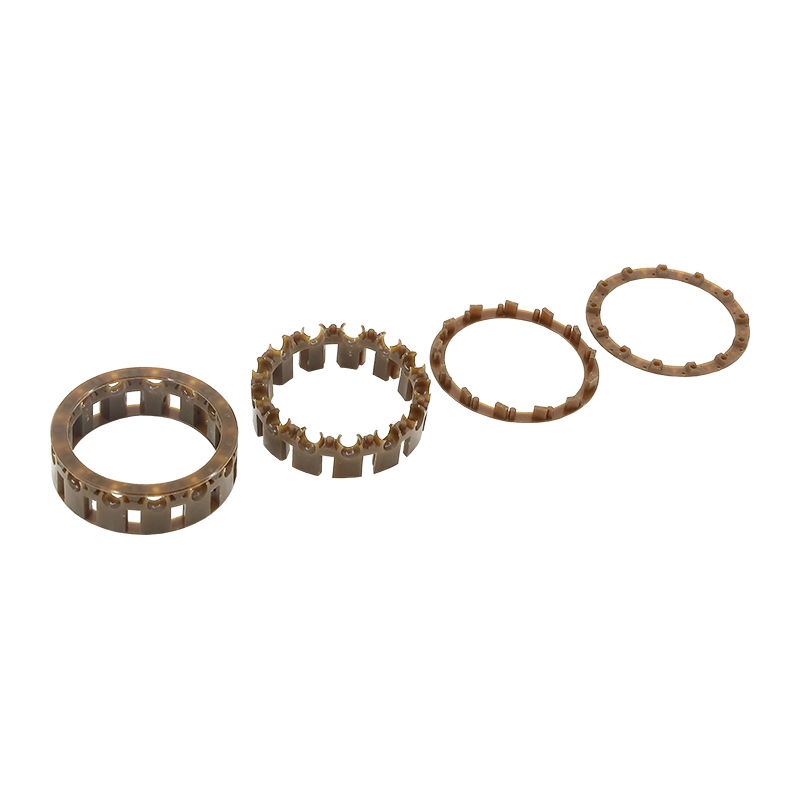
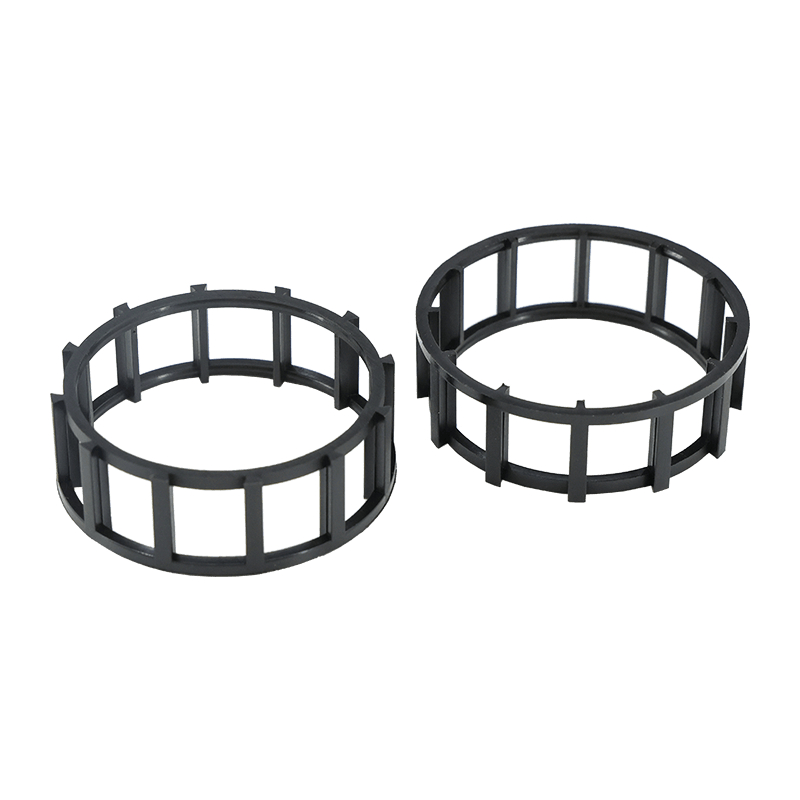 Black Plastic Cylindrical Roller Bearing Cage for NJ SeriesPrecision NJ-series cylindrical roller bearing cage that maintains roller spacing and alignment, helping prevent skew, edge loads, and running-torque drift.View Product →
Linear Motion Cages and Low-Drag Sliding Systems
Linear motion brings its own version of the same problem. In a linear guide, the running resistance is usually discussed as a drag force rather than a torque, but the physics is familiar: rolling elements moving through a cage, lubricant being distributed, and any sliding contact adding to the total.
Low-speed linear systems are especially sensitive to stick-slip, where the transition between rest and motion repeats instead of settling into smooth travel. A cage that keeps the balls evenly spaced and lightly preloaded against the track helps the motion stay continuous, which is why cage material and pocket design matter as much here as they do in rotating bearings.
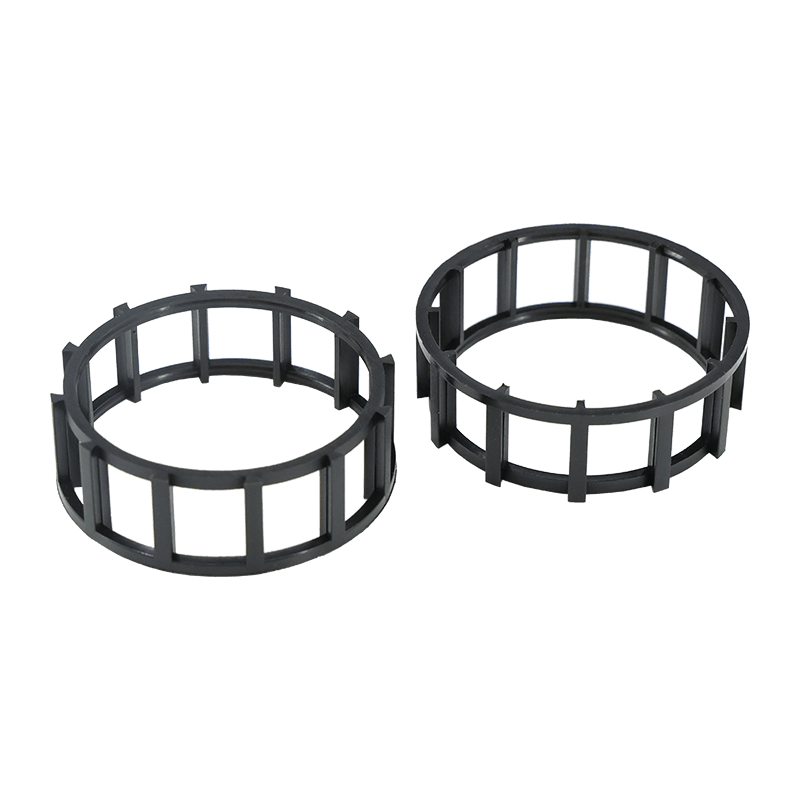
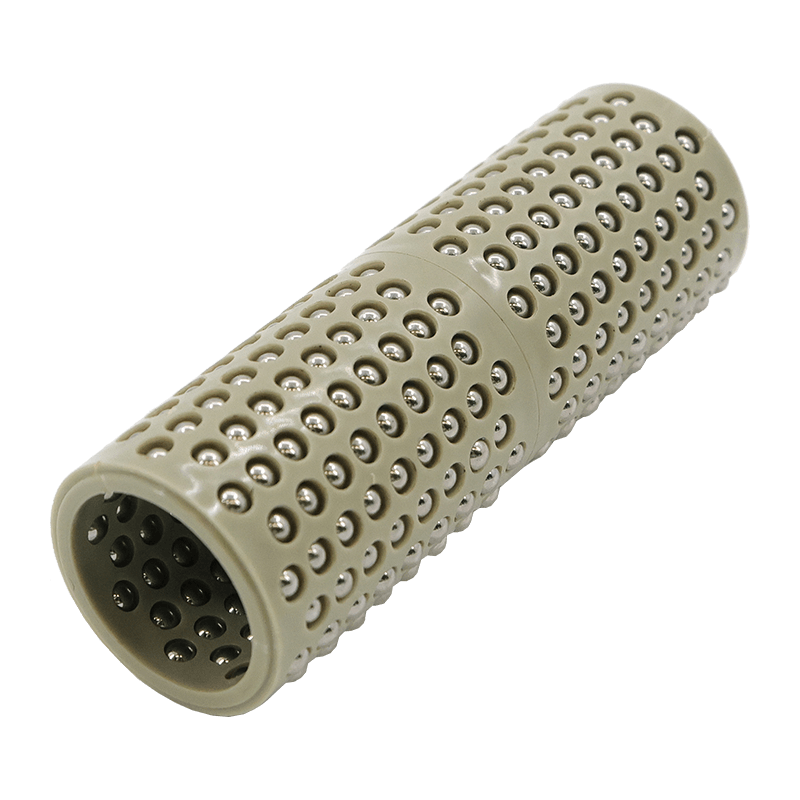
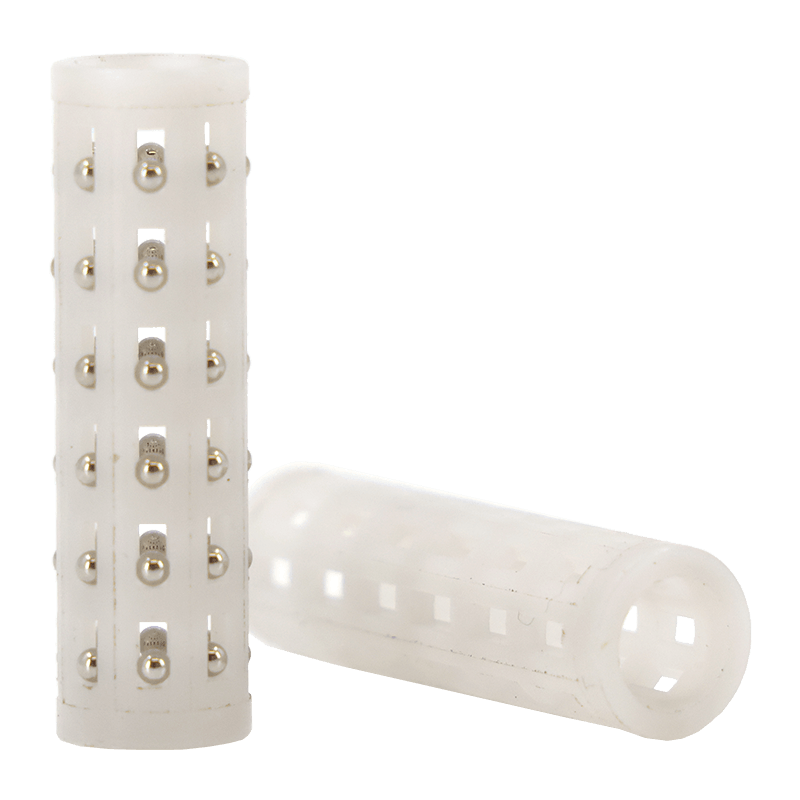 Nylon Linear Motion Ball Cage Split and Standard TypesNylon linear ball cage in standard or split designs; maintains ball spacing to support smooth low-speed travel and simplify retrofit installation around fixed shafts.View Product →
Design and Assembly Habits That Keep Running Torque Predictable
Most running torque surprises are avoidable. A few habits keep the numbers where the drawing expects them.
- State the measurement conditions, including speed, load, lubricant and temperature, on the drawing itself.
- Specify cage pocket clearance as a tolerance band rather than a single nominal value.
- Check the fit of the shaft and housing before blaming the bearing for high drag.
- Verify lubricant quantity: starvation raises friction, and over-filling raises churning losses.
- Run in new assemblies and record the change, so the second reading has something to compare against.
Suppliers can also help before an order is placed. When you are comparing cage options, questions about friction behaviour and pocket design are usually more useful than a price column alone, as we discuss in this note on evaluating a needle roller cage supplier.
Questions We Hear From Engineers
Is running torque always lower than breakaway torque?
For the same conditions, usually yes, because kinetic friction is generally lower than static friction. It is not a rule, though. In high-speed assemblies, viscous drag grows with speed, so a running reading taken at full operating speed can be higher than the breakaway value measured at rest.
What is stiction, and how does it relate?
Stiction is the resistance that keeps two stationary surfaces locked together, often strengthened by lubricant that has drained away or by a long period of dwell under load. Breakaway torque is the measurable symptom. When stiction is high, the torque trace shows a sharp peak followed by a much lower plateau.
How does a nylon cage affect running torque?
It reduces mass, keeps friction against steel relatively low, and its pockets can hold lubricant close to the rolling contact. Material stiffness, thermal expansion and pocket clearance all have to suit the application, so a polymer cage is never a universal answer. It is a design choice with measurable consequences.
Can running torque be predicted before testing?
Rough estimates are possible from load, friction coefficient and radius, and bearing drag models exist. They tend to lose accuracy once lubrication, cage behaviour and installation effects are involved. For anything critical, a measured value beats a calculated one.
Running torque is the quiet cost of keeping a machine in motion, and it deserves a place next to the headline load ratings on any specification. Measure it under defined conditions, watch how it changes after run-in, and treat the cage as an active part of the friction budget rather than a spacer that happens to hold rollers in line.
If you are working through a drag or noise problem on a bearing assembly and want a second opinion on cage design, our team is always glad to talk through the details. That kind of conversation is usually faster than another round of trial and error.